
In luxury home design, a staircase is much more than a way to move between floors — it’s a central architectural feature that reflects both artistry and structure.
Today, designers and homeowners alike are embracing the powerful visual contrast and timeless sophistication that comes from combining wood and metal in staircase design.
The pairing of these two materials creates a balance between warmth and strength, tradition and modernity and craftsmanship and innovation.
Whether featured in a contemporary Toronto penthouse or a mountain retreat in Whistler, wood-and-metal staircases bring sculptural beauty and enduring quality to any home.
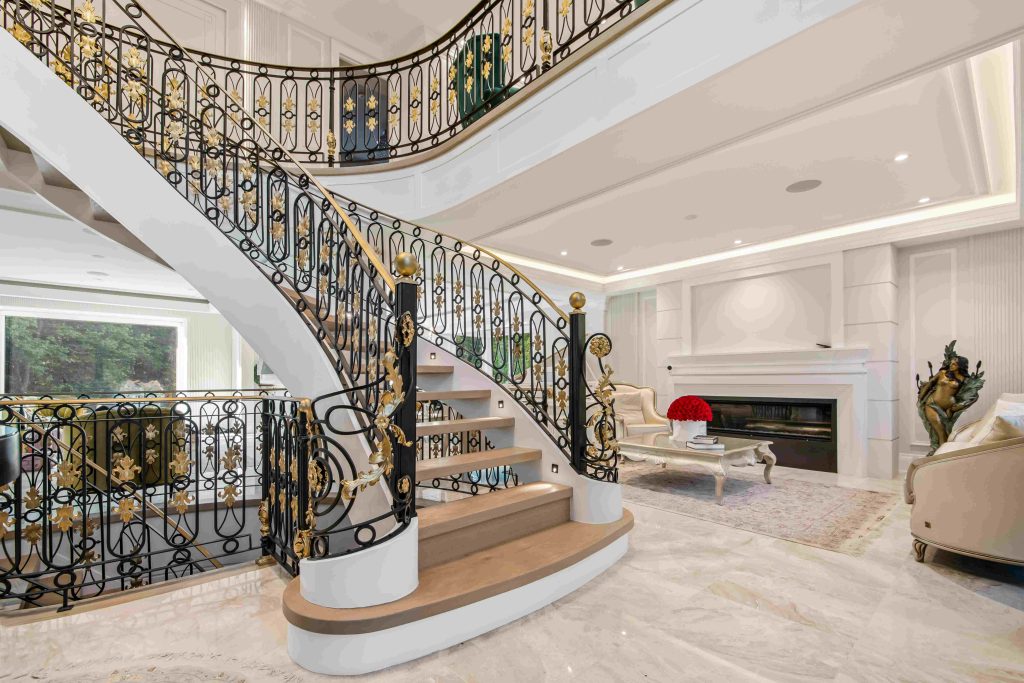
1. The Harmony Between Wood and Metal
At first glance, wood and metal might seem like opposites — one natural and warm, the other industrial and cool. But when combined thoughtfully, they complement each other in both texture and tone.
- Wood introduces warmth, character, and organic beauty. It softens the structure and connects the staircase to the home’s natural elements.
- Metal adds precision, strength, and modern appeal. It gives the staircase definition, contrast, and architectural integrity.
Together, they create a visual and tactile balance that feels refined, stable, and timeless — a perfect reflection of the values behind Art Boulle’s craftsmanship.
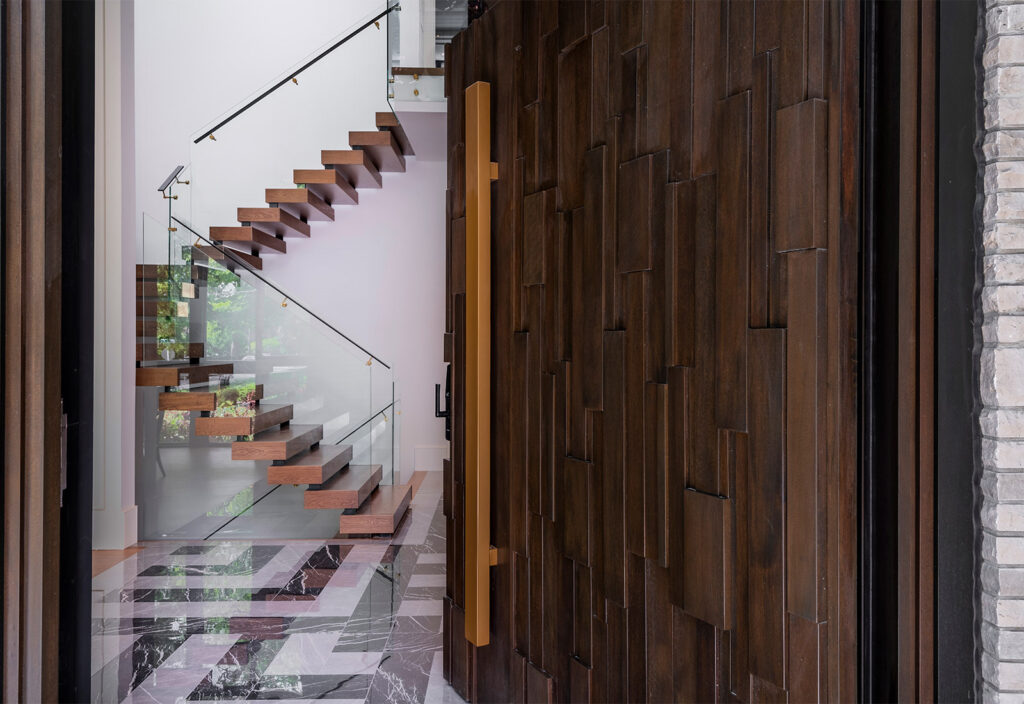
2. Design Styles That Benefit from the Combination
The wood-and-metal pairing works across a range of architectural styles, each interpreting the materials in its own way:
- Contemporary Homes: Sleek metal stringers paired with walnut or white oak treads create clean lines and a minimalist aesthetic.
- Industrial Modern Spaces: Blackened steel frames with distressed or matte-finished wood treads highlight the raw, authentic beauty of each material.
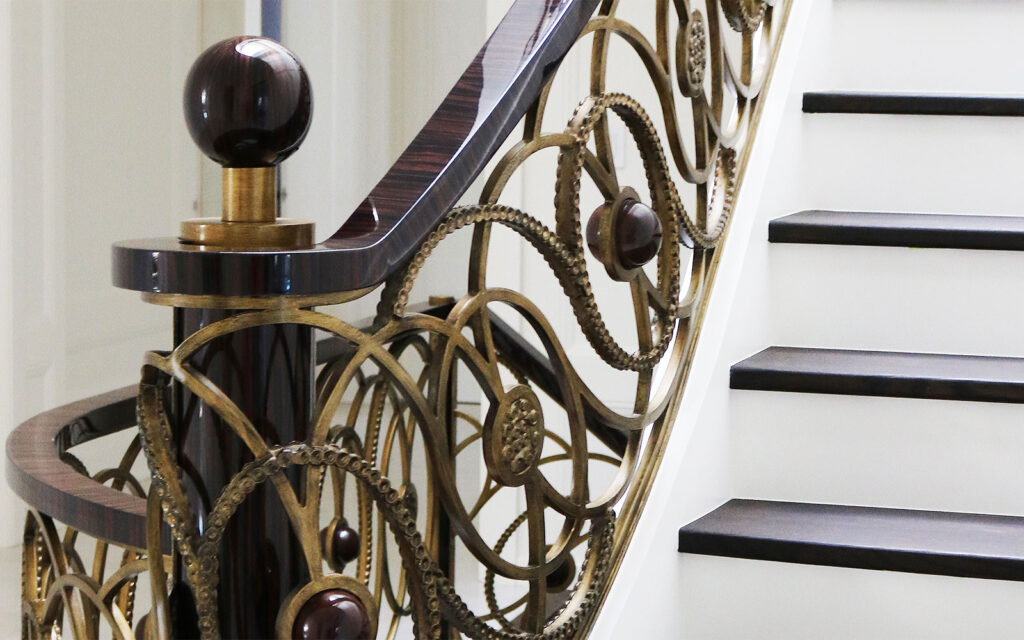
- Classic or Transitional Interiors: Ornamental wrought-iron railings combined with carved wood banisters achieve an elegant blend of tradition and modern craftsmanship.
- Open-Concept Homes: Floating staircases with wood steps and metal supports maintain transparency while offering visual warmth.
This versatility makes wood-and-metal staircases ideal for luxury residences, adapting seamlessly to both modern and timeless design narratives.
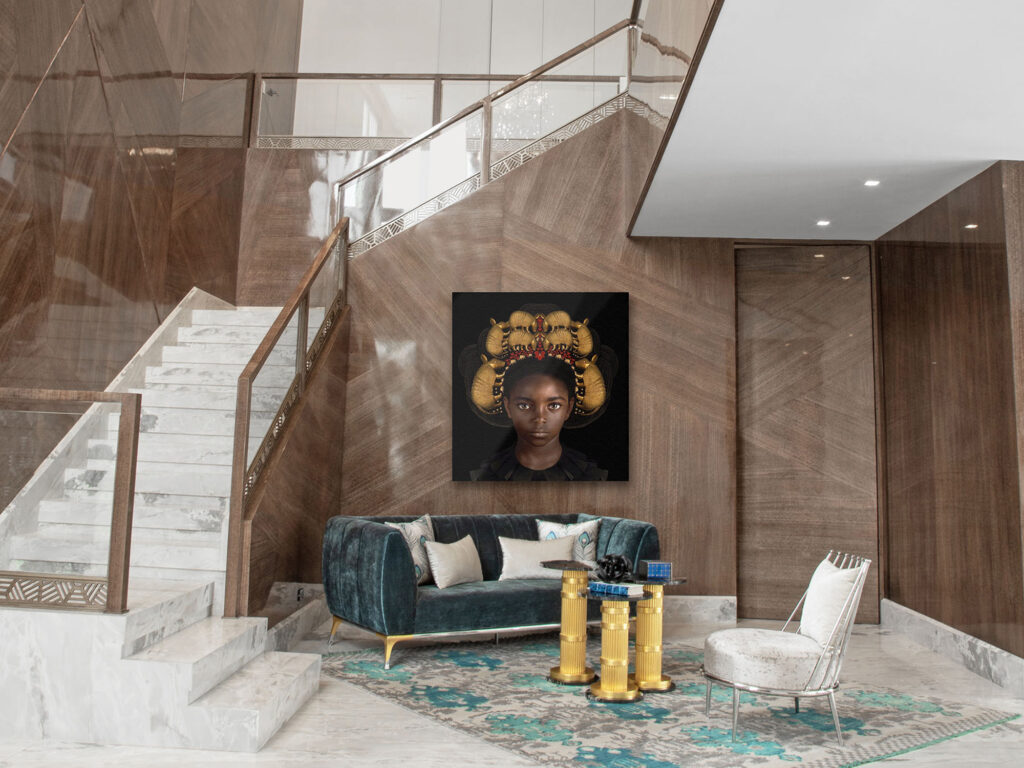
3. Structural and Functional Advantages
Beyond aesthetics, this material pairing also offers remarkable structural and performance benefits:
- Durability: Metal provides rigidity and stability, while high-quality hardwoods such as walnut, oak, or mahogany ensure long-lasting tread surfaces.
- Design Freedom: The strength of metal allows for daring architectural forms — such as floating or cantilevered stairs — without compromising safety.
- Low Maintenance: When properly finished, both materials are resistant to wear, making them ideal for high-traffic areas.
- Sustainability: Many designers choose responsibly sourced wood and recyclable metals, aligning luxury design with environmental consciousness.
A staircase built with this balance of materials performs as beautifully as it looks.

4. Key Customization Options
Luxury staircases are always custom creations, tailored to the home’s proportions, lighting, and character. When combining wood and metal, customization ensures both materials work harmoniously.
- Treads and Risers: Select from rich hardwoods such as teak, walnut, or white oak for the treads, finished with natural oils or stains that enhance grain and durability.
- Balustrades and Railings: Metal components — from sleek stainless steel to handcrafted wrought iron — can be minimalist or highly decorative, depending on the desired effect.
- Structure and Supports: Powder-coated steel or brushed bronze frames provide visual contrast and strength, while concealed metal stringers create a floating illusion.
- Finishes and Details: Coordinating metal tones with door hardware, light fixtures, or trim unifies the space and reinforces architectural cohesion.
Each element, from tread profile to railing design, is handcrafted with precision to achieve the perfect blend of style and structure.
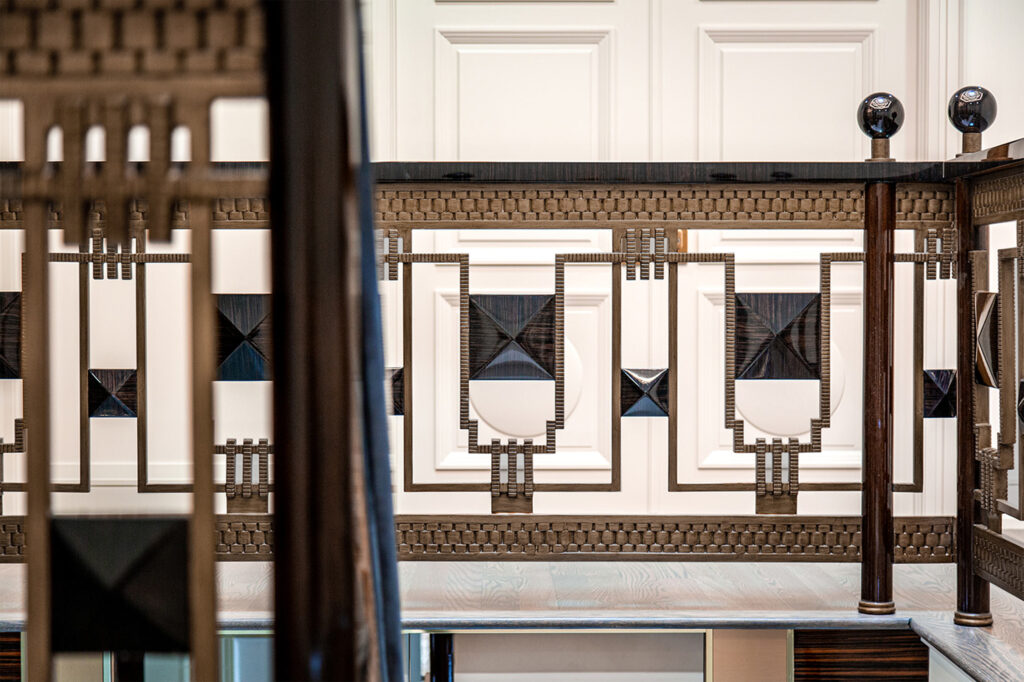
5. Integrating Lighting and Glass
To elevate a wood-and-metal staircase even further, designers often incorporate lighting and glass elements.
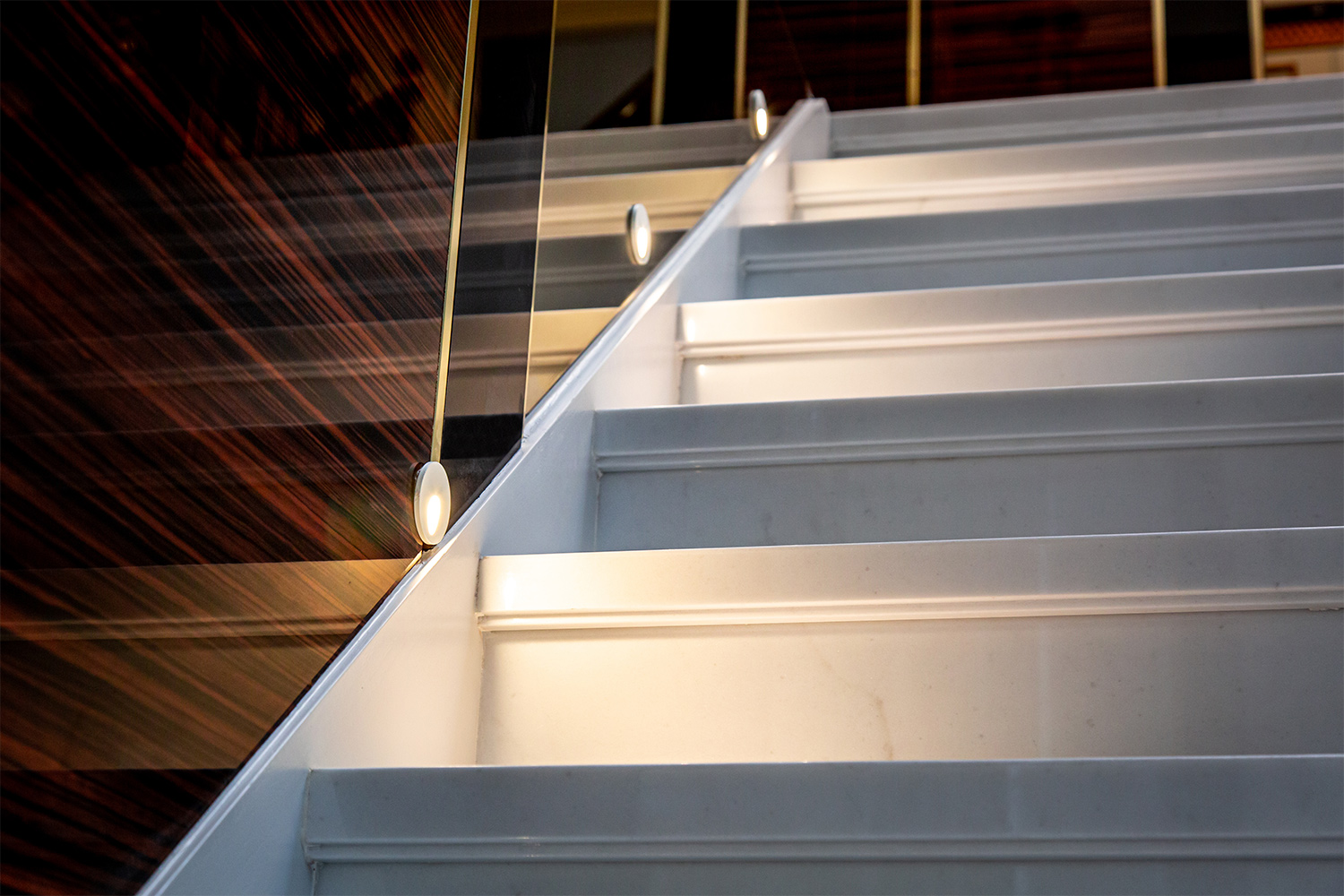
- Integrated LED Lighting can be installed under each tread or along the railing to highlight the staircase’s form and create a warm ambiance at night.
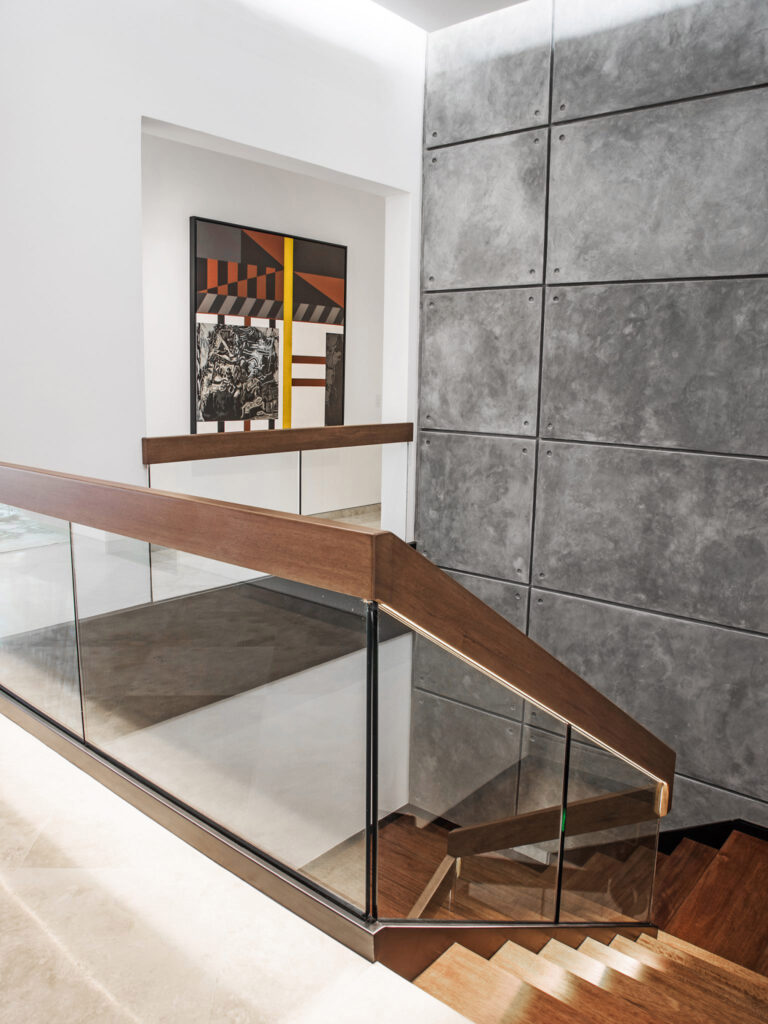
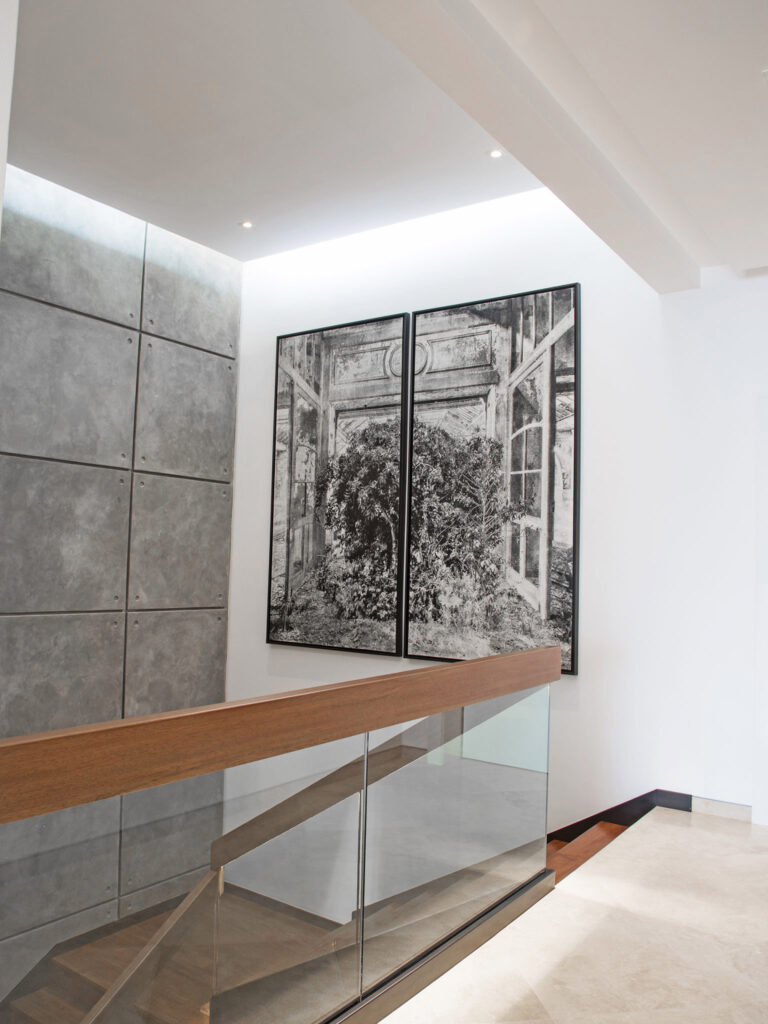
- Glass Railings maintain visibility and openness, enhancing the contrast between the solidity of metal and the natural elegance of wood.
These design additions enhance both functionality and atmosphere, allowing the staircase to serve as a focal point within the home’s architecture.
6. Craftsmanship and Attention to Detail
The beauty of combining wood and metal lies in the precision of craftsmanship.
At Art Boulle, each staircase is handcrafted by artisans who understand both materials intimately.
- Wood components are individually milled, sanded, and finished to perfection.
- Metal parts are engineered and welded with exacting precision, ensuring strength and stability.
- Both materials are joined seamlessly, creating transitions so smooth they appear sculpted from a single vision.
This level of craftsmanship transforms the staircase from a structural necessity into an architectural statement — one that reflects the artistry and refinement of bespoke design.
Where Function Meets Art
A staircase is one of the most expressive elements in a luxury home — a piece that connects levels, light and lifestyle.
The combination of wood and metal captures everything that defines modern luxury: balance, craftsmanship, and timeless beauty.
At Art Boulle, we specialize in creating custom staircases that reflect the individuality of each home. Our designers and artisans work collaboratively to ensure every detail — from material selection to final finish — achieves both visual harmony and structural perfection.
Visit ArtBoulle.com to explore how a custom wood-and-metal staircase can transform your home into a work of architectural art.
Because when crafted with intention, every step becomes a statement of design excellence.