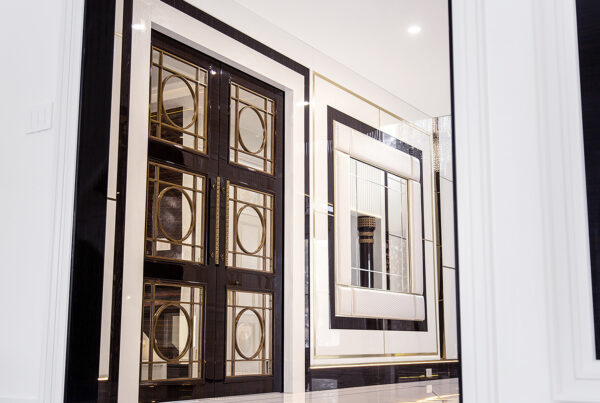


A grand entrance door has always been more than a point of entry. It’s a declaration. A first impression. A preview of the world that exists inside a home.
In 2026, entrance door design is moving toward a new era — one defined by bold architecture, innovative materials and deeply personalized craftsmanship.
Today’s luxury homeowners want an entrance that doesn’t simply complement the home, but one that expresses identity, artistry, and intention.
Here’s a look at the most influential grand entrance door trends for 2026, and why they’re reshaping modern luxury across Canada and beyond.
1. Monumental Scale and Presence
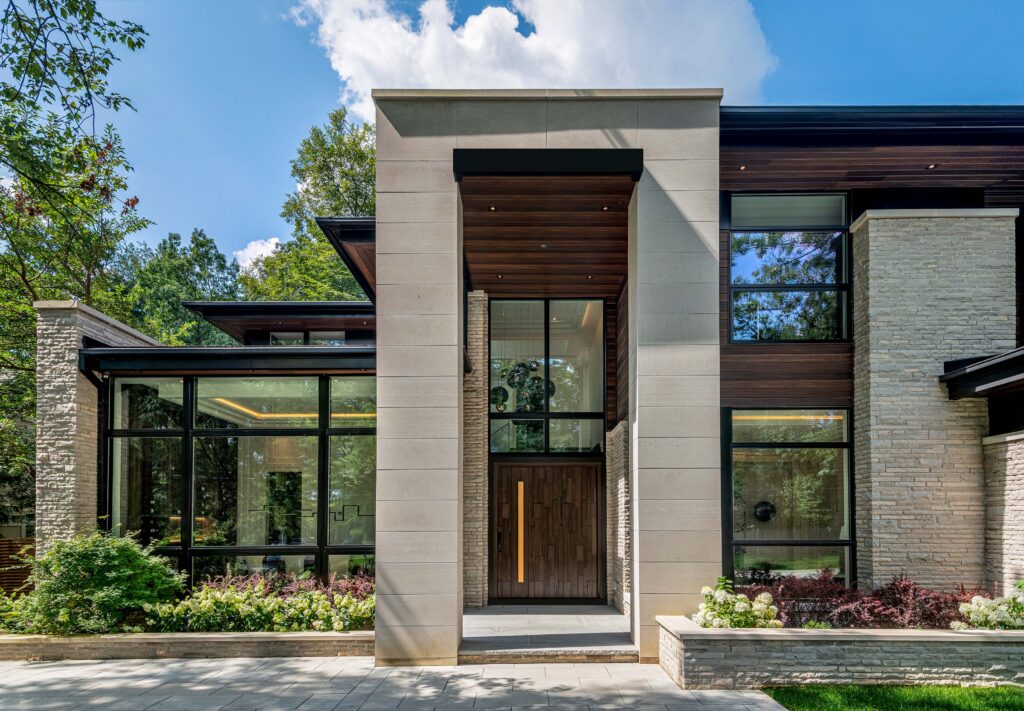
Oversized doors have been gaining momentum for years, but 2026 marks a new level of ambition. Grand entrances are becoming architectural statements, often reaching 10 to 12 feet in height — sometimes even more in custom builds.
Why this trend is growing:
- Larger doors create a sense of ceremony when entering a home.
- The scale complements the rising popularity of tall ceilings and expansive façades.
- Modern engineering and pivot systems allow these massive doors to open effortlessly.
For many homeowners, size is no longer about grandeur alone; it’s about proportion, balance, and architectural drama.
Art Boulle has seen a significant rise in requests for oversized pivot doors, crafted from wood, metal, or a hybrid of both.
2. Mixed-Material Surfaces With Depth and Contrast
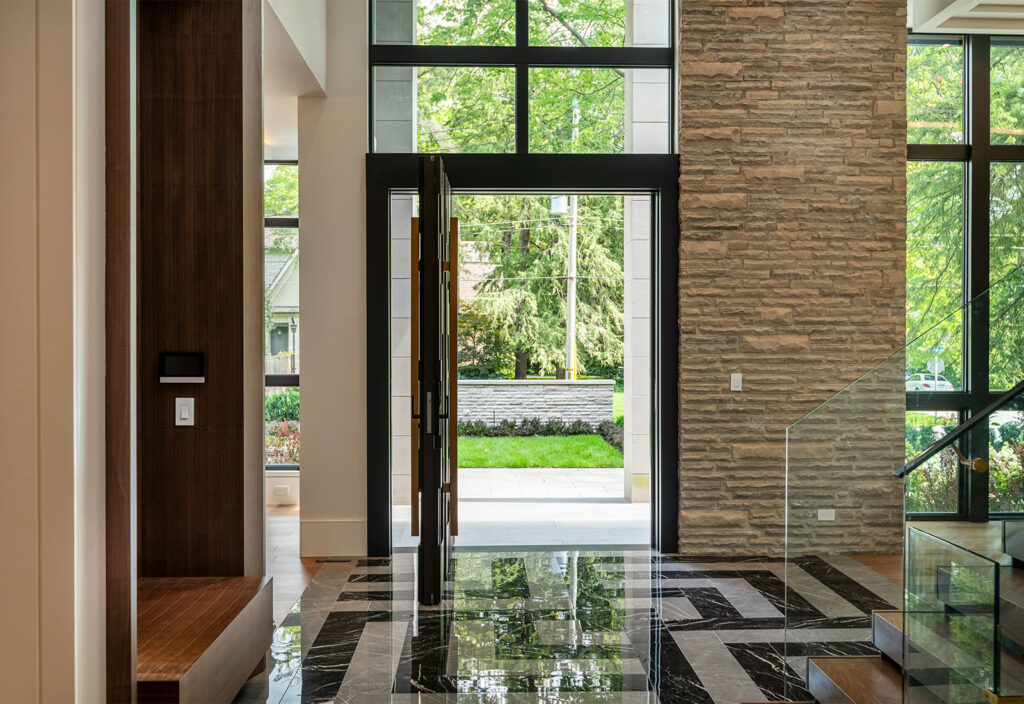
2026 is the year of material fusion — particularly the combination of wood, metal, and glass in refined, artistic configurations.
What’s trending:
- Wood + Bronze accents for warmth and sculptural depth.
- Metal panels with carved or forged textures that capture light in unexpected ways.
- Full-height glass inlays framed by dark metals for a minimalist, contemporary tone.
- Layered surfaces that create subtle shadowing and visual movement.
Designers are embracing materials not just for durability, but for the emotion they evoke — the softness of wood, the permanence of metal, the clarity of glass.
This interplay brings far more personality to an entrance than a single-material door ever could.

3. Statement Hardware That Doubles as Art
Hardware is no longer a minor detail. In 2026, it will become a central design feature.
Homeowners want:
- Extra-long pull handles that span half the height of the door.
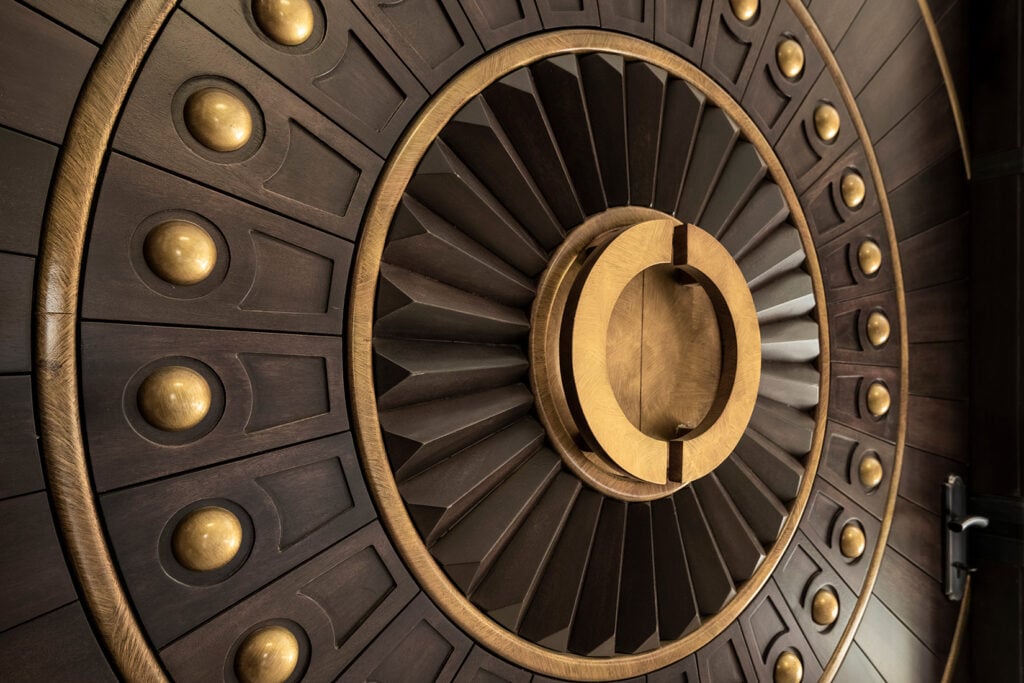
- Custom-forged handles that feel sculptural and tactile.
- Hardware finishes that match interior themes — brushed gold, matte black, oxidized bronze.
- Concealed pivot and hinge systems that keep the door visually clean.
These details are the “jewelry” of the entrance and when crafted by hand, they introduce a level of refinement that mass-market doors simply can’t copy.
4. Warm Minimalism and Clean Architectural Lines
Minimalism isn’t new but in 2026, it’s evolving into something more inviting.
Instead of stark, cold finishes, homeowners are gravitating toward warm minimalism:
- Soft-toned woods with subtle grain patterns
- Warm metal trims, such as brushed brass or antique bronze
- Thin sightlines and quiet geometry
- Smooth planes with gentle sculpting instead of harsh edges
This approach allows the door to feel modern without losing the depth and comfort that luxury homeowners crave. Art Boulle’s recent projects reflect this shift, balancing clean silhouettes with the warmth of handcrafted materials.

5. Smart Integration Without Visual Disruption
The smart home trend continues to grow but 2026 introduces a more refined approach: technology that works invisibly.
Trending integrations include:
- Hidden smart locks
- Biometric access that blends into the door’s surface
- Motion-sensitive lighting integrated into door surrounds
- Thermal and acoustic insulation built into the door core
- Sensors embedded discreetly into the frame rather than the door face
Luxury homeowners want convenience and security but not at the expense of aesthetics. Today’s smartest doors look beautifully simple, even though their engineering is anything but.

6. Artistic Metalwork and Carved Patterns
This trend speaks to homeowners who want a door that feels one-of-a-kind — more like a commissioned art piece than a structural fixture.
Popular artistic expressions for 2026:
- Hand-forged metal motifs
- Carved geometric patterns with three-dimensional depth
- Waterjet-cut metal overlays in abstract designs
- Organic, flowing patterns inspired by nature
- Personalized crest or monogram elements that add a bespoke touch
These doors don’t just welcome guests – they captivate them. Art Boulle’s metal artisanship places this trend at the forefront, offering homeowners the opportunity to create entrances that feel personal, storied, and deeply expressive.

7. Sustainability Through Craftsmanship and Material Choice
Luxury homeowners are increasingly conscious of ethical design, not just appearance. In 2026, sustainability becomes a sophisticated trend:
- Responsibly sourced hardwoods
- Metal finishes that reduce chemical emissions
- Long-lasting construction that minimizes replacements
- Energy-efficient insulated cores
- Glass inserts with Low-E coatings
Eco-conscious doesn’t mean compromising beauty. In fact, it elevates it because luxury today is defined by quality, purpose, and long-term value, not excess.
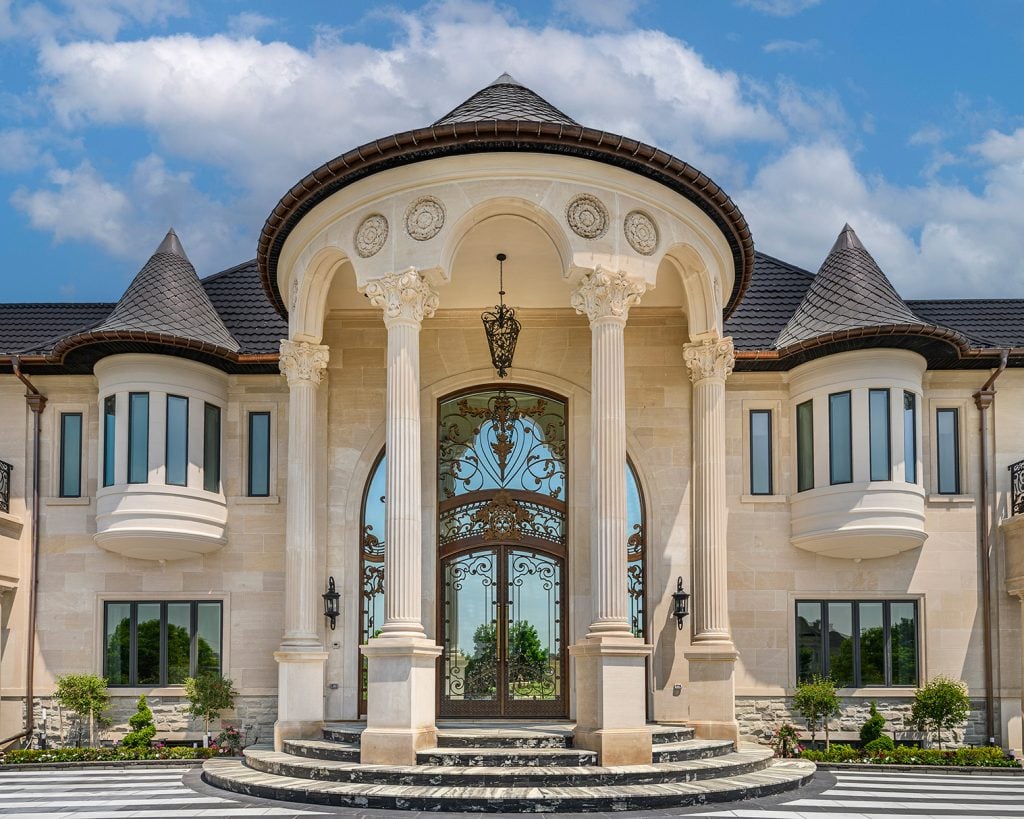
The Entrance as an Experience
In 2026, a grand entrance door is no longer a simple design element. It is:
- A sculpture
- A statement of identity
- A blend of innovation and craftsmanship
- A preview of the world behind it
For homeowners building or renovating luxury residences in Canada, the entrance is the moment where architecture becomes personal, the threshold between public and private, between expectation and experience.
At Art Boulle, each custom door is crafted with this philosophy in mind. Through the careful balance of materials, scale, technology, and artisanal detail, we create entrances that are not only current for 2026, but timeless beyond it.
Visit ArtBoulle.com to explore how a handcrafted custom door can redefine your home’s first impression.
Because in luxury design, the entrance isn’t simply where the home begins — it’s where the story begins.