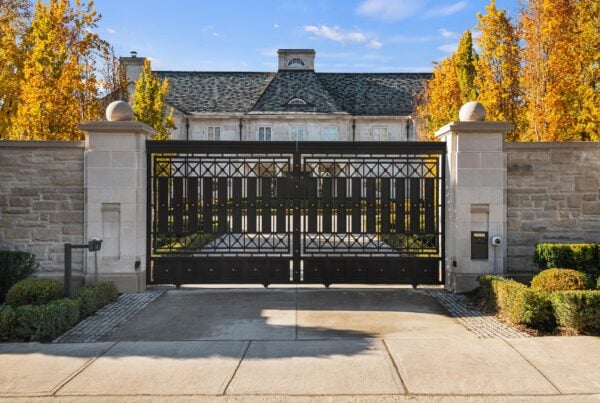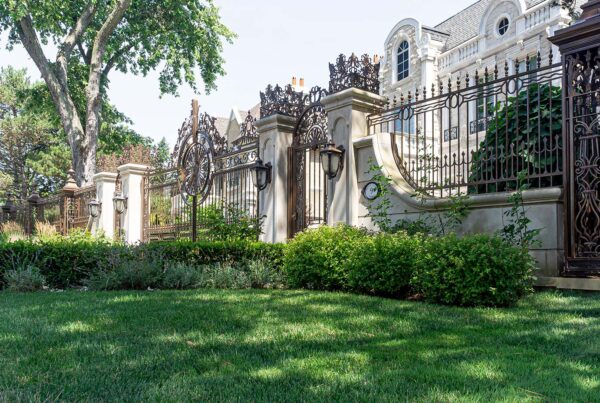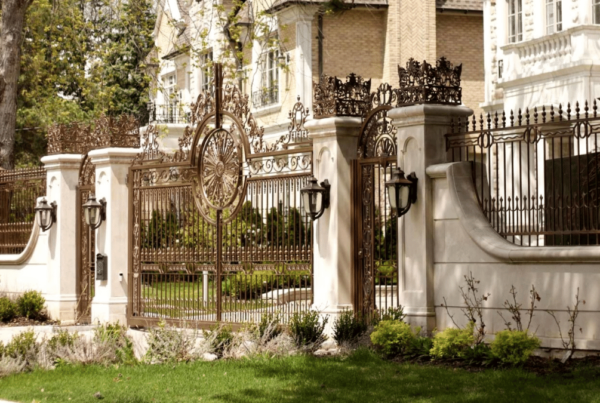


Gates have long been more than mere entrances—they have been symbols of power, protection, status and personal expression. Throughout history, gates have evolved in both function and form, reflecting shifts in architecture, technology and societal values.
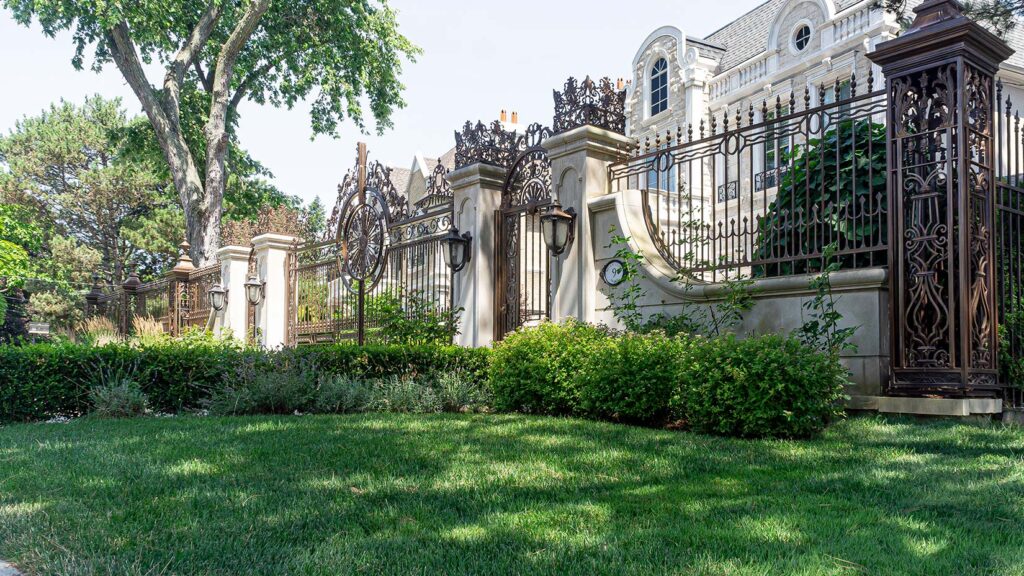
From humble wooden barriers to elaborate wrought-iron masterpieces, the design of gates has transformed dramatically over time.
Today, gates serve as both functional security features and highly personalized design statements in luxury homes around the world.
At Art Boulle, we believe that a gate is not just an entryway, rather it is the first impression of your home.
Let’s explore the rich history of gate design, how it has evolved and how modern craftsmanship blends the old with the new to create bespoke gates that are both timeless and forward-thinking.

1. The Ancient Gate
In ancient times, gates were designed primarily for security and protection. Cities and kingdoms were often surrounded by massive stone walls, and the gates were the sole points of entry and exit.
These gates were usually fortified structures made of wood or metal, designed to keep invaders out while providing controlled access for citizens.
The design of ancient gates often reflected the culture and values of the society they protected.
For example, in ancient Egypt, monumental gates adorned the entrances to temples and palaces, often made from carved stone or wood.
These gates were not only functional but also decorated with symbolic reliefs that conveyed the power of the ruling pharaoh.

In ancient Rome, gates were built into stone walls and fortified with bronze or iron bars.
The famous Roman gates often had grand arches, and in some cases, decorative motifs like laurel wreaths or imperial insignia.
Roman gates were symbols of authority and strength.
Similarly, in medieval Europe, castles were built with thick stone walls and heavy iron gates to protect against invasions. Drawbridges, moat-protected gates, and fortified entrances were the defining features of this period.
2. The Renaissance

With the advent of the Renaissance, there was a shift toward beauty and artistry in gate design.
As architecture flourished during this period, gates became not only functional but also works of artistic expression.
The Renaissance saw a rise in ornate ironwork and sculpted stone gates. In Italy, grand entrance gates were often designed with elaborate stone carvings and classical motifs, reflecting the flourishing of Greek and Roman art and culture.
These gates marked the entrances to villas, palaces, and gardens, showcasing the wealth and status of the homeowners.
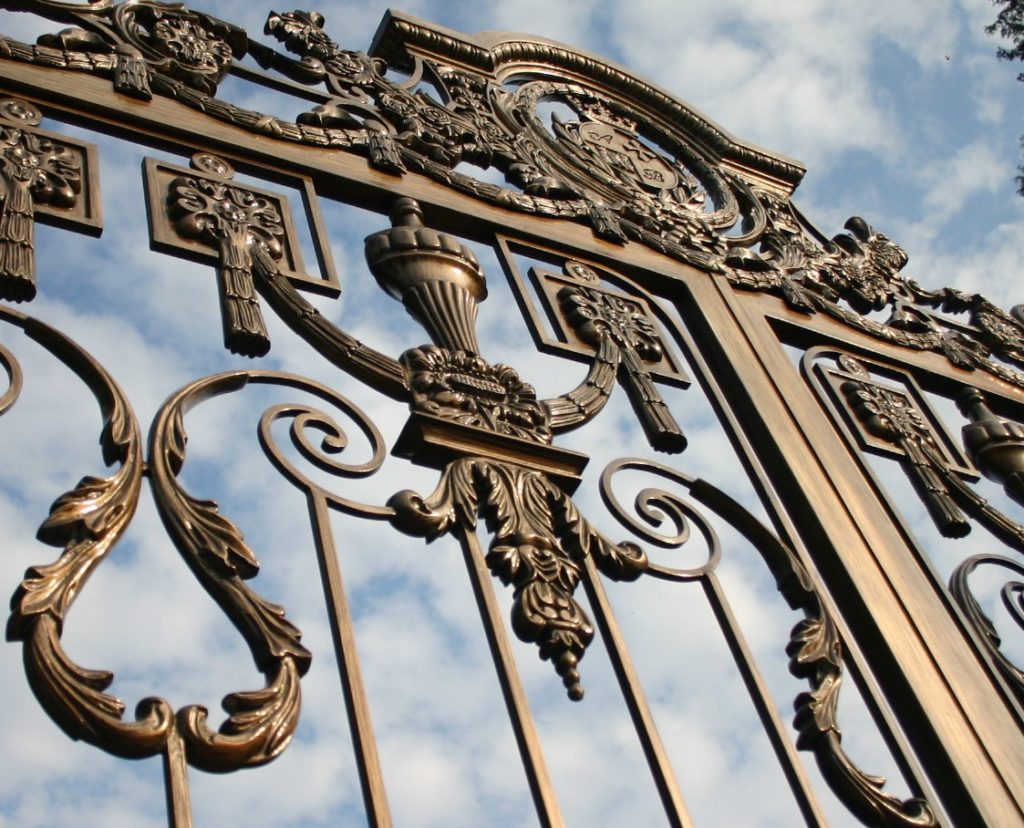
In France, the Louis XIV era (also known as the Baroque period) saw the emergence of luxurious gates with flourishing scrollwork, intricate patterns, and gilded metal accents.
The gates to the Palace of Versailles stand as a prime example, with wrought-iron designs interwoven with gold leaf to reflect the opulence of the French monarchy.
The Renaissance marked the transition from purely defensive gates to those designed with a sense of grandeur and beauty—a trend that would continue to evolve through the centuries.

3. The Industrial Revolution
The Industrial Revolution of the 18th and 19th centuries was a turning point for gate design, as it introduced new materials and mass production techniques that made gates more accessible and diverse.
During this period, iron and steel became widely used materials in gate design, thanks to their strength, durability, and ability to be molded into detailed patterns.
The cast-iron gate became a staple in Victorian architecture, particularly in cities like London, Paris, and New York, where gates were often used to define private estates and parks.
Iron gates during this period were often decorated with ornate, floral patterns, scrollwork, and symmetrical designs, reflecting the Victorian taste for elaborate decoration. Gates were no longer purely functional but had become a means of personal expression, with some gates featuring family crests, monograms or artistic motifs.
In the United States, the rise of railroad infrastructure and the availability of wrought-iron gates allowed for the expansion of luxury homes with well-designed, secure entrances. The Industrial Revolution ushered in an era where gates could be designed to suit both elegance and function on a much larger scale.

4. The 20th Century
As the world moved into the 20th century, Art Deco and Modernist styles influenced the design of gates, particularly in the luxury homes and buildings that emerged in cities across North America.
In the 1920s and 1930s, the Art Deco movement brought geometric patterns, bold lines, and stylized ornamentation to gate design. This period saw a preference for smooth metal surfaces, sharp angles, and luxurious materials like brass, chrome, and stainless steel.
Art Deco gates were often symmetrical and featured clean lines and elegant detailing, symbolizing the progress and modernity of the era.
As the mid-20th century approached, Modernism began to take center stage. The design philosophy embraced simplicity, functionalism, and minimalist aesthetics. Gates from this period were less ornate, favoring simple, geometric shapes and straight lines. Steel gates with glass insets or wooden gates with clean, linear designs became popular, reflecting the era’s push for innovation and elegance in simplicity.
5. Today
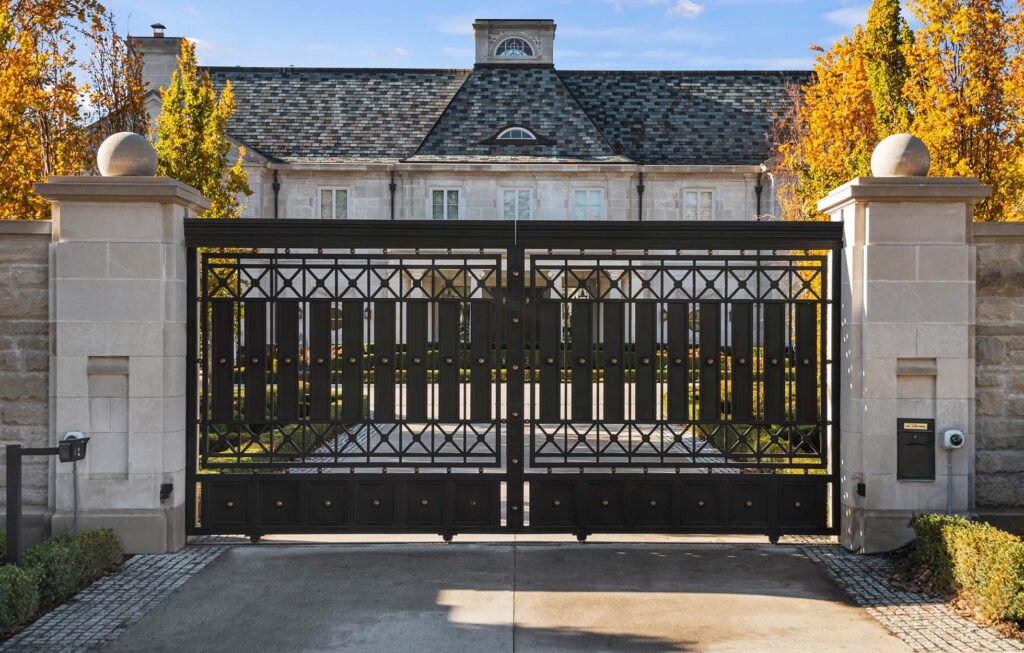
In the 21st century, gates continue to evolve. Today, gates are more customizable than ever, and the design possibilities are virtually limitless. With the advent of new technologies and materials, bespoke gates have become a sought-after feature in luxury homes.
Homeowners now choose from a variety of materials, including brushed stainless steel, powder-coated aluminum, wood, and even glass.
High-end gates today often incorporate advanced security features — think smart access control systems, video surveillance, and biometric recognition. At the same time, modern gates still pay homage to the design legacies of the past, with artisanal details and custom finishes that bring sophistication and artistry to today’s luxury residences.
Art Boulle’s bespoke gates combine craftsmanship, material excellence, and cutting-edge technology to create gates that are both secure and beautiful.
Final Thoughts
The evolution of gate design has been a journey from practicality to artistry. From the defensive wooden gates of ancient times to the custom-crafted, high-tech gates of today, gates have always played a crucial role in how we define the boundaries of our homes.
Today, gates are no longer just functional barriers; they are expressions of personality, status, and design sophistication. Whether incorporating historical influences or embracing the latest trends, gates continue to be an essential part of luxury home design.
At Art Boulle, we understand that your gate is more than an entry. It is an invitation into a world of elegance, artistry and security.
Visit ArtBoulle.com to explore how our bespoke gate designs can transform your property into a timeless masterpiece.