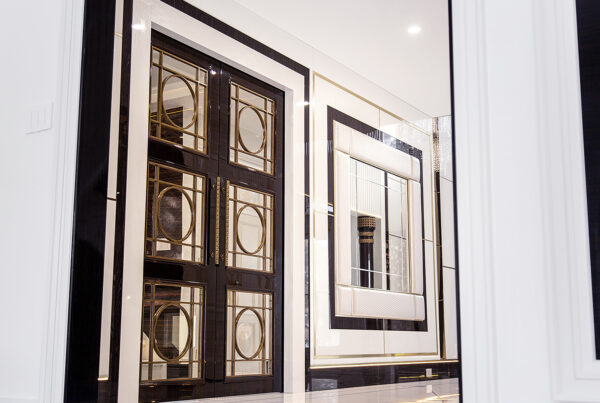


Some doors want to be noticed for their carving or their grain. Steel and glass front doors are different. They want you to notice the light. Slim metal lines, big clear panes, and a house that seems to open up before you’ve even touched the handle. It’s the entrance modern architecture was waiting for, and honestly, it’s one of the pieces we most enjoy building.
Here’s what makes steel and glass front doors work, the decisions you’ll make along the way, and how to make sure yours performs as beautifully in a Canadian February as it looks in a magazine.

Why steel and glass belong together
Glass on its own is all light and no backbone. Steel on its own is all strength and no view. Put them together, and each one covers the other’s weakness. Steel is strong enough to hold very large panes in very thin frames. This allows the glass to do the talking, as the metal almost disappears. That’s the whole appeal: maximum light, minimum frame, and a front door that feels like part of the architecture rather than something added to it.
The beauty is in the sightlines
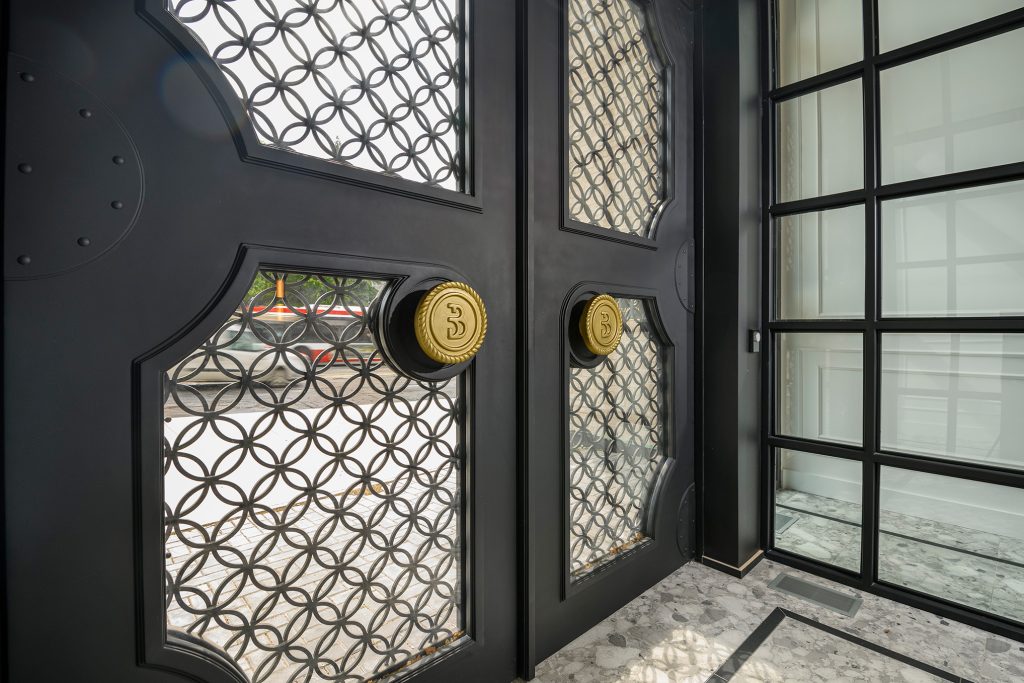
If one detail separates a luxury steel and glass door from an ordinary one, it’s the width of the metal. Designers call these sightlines: the visible lines of frame and bar between the panes. The narrower they are, the more refined the door looks. Making sightlines thin without losing rigidity is not a catalogue option. It is a craft problem, and it’s where hand fabrication truly shines.
A grid of fine steel bars reads as crisp and quietly industrial. One or two uninterrupted panes feel calm and minimal. Both start with the same question: how much of the house do you want to reveal from the front step?
Choosing the glass
The glass sets the mood as much as the steel does. These are the options we talk through most often:
- Clear low-iron glass — the purest look, without the faint green tint of standard glass.
- Fluted or reeded glass — vertical texture that softens the view but keeps the light. A real favourite right now.
- Frosted or acid-etched glass — full privacy with a soft, even glow.
- Tinted or bronze glass — warmth and a little mystery, elegant against a dark bronze finish.
Whatever the look, entrance glass should be safety-rated (tempered or laminated). In our climate, it also should be an insulated glass unit rather than a single pane. Which brings us to the part most people don’t think about until it’s too late.
Built for a Canadian winter
Here’s the honest bit. Steel conducts cold very well, and glass isn’t a natural insulator either. A steel and glass door that’s simply welded up and glazed will frost, fog, and leak heat all winter. The answer is engineering: frames designed with a thermal break, so the inside and outside faces aren’t one continuous piece of cold metal; insulated glass with sound seals; and weatherstripping that closes tight every single time.
It’s the part nobody photographs, and it’s the part that decides whether you still love the door in year five. If you want the detail, we’ve written about how custom doors perform in extreme Canadian climates.

Finishes that age well
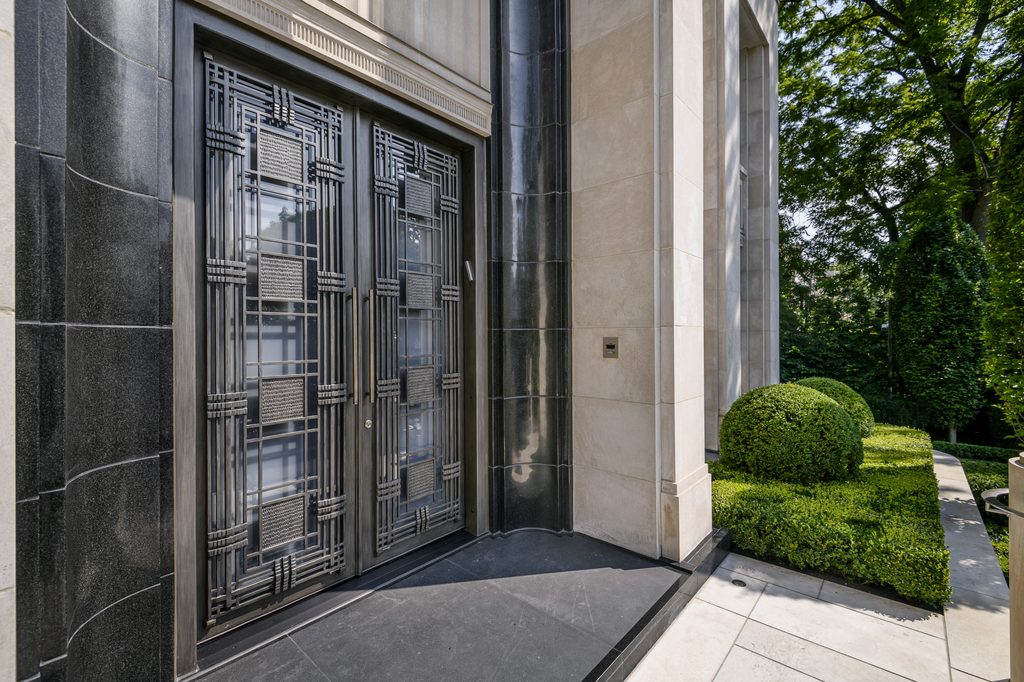
Most steel and glass doors are finished dark, and matte black is the classic for good reason. But it’s far from the only choice. Warm bronze tones, deep graphite and hand-applied patinas each change the personality of the door. On an exterior door, the finish is also armour. It has to be able to shrug off road salt, strong sun, and freeze-thaw cycles without flaking or rusting at the edges.
Pivot or hinged?
Steel and glass is made for the pivot door: one tall, wide panel turning on a concealed axis. This is how you get those dramatic floor-to-ceiling entrances. A hinged door is the more traditional route and pairs beautifully with sidelights and a transom. Neither is right for every home. We’ve laid out the trade-offs in pivot doors vs hinged doors, and you can see the systems we use on our pivot doors page.

Where a steel and glass door looks its best
Contemporary and minimalist homes are the obvious match, but these doors are more versatile than people expect. A black steel grid looks wonderfully at home on a transitional or even a traditional facade. There, it reads as a nod to old European ironwork. Indoors, the same construction makes stunning partition doors for a study, a wine room or a dining room. This gives you separation without losing the light.
Designing yours
Every steel and glass door we make starts with the opening and the architecture around it. Then come the proportions, the glass, the finish, and the way it opens. It’s built by hand in our own facilities and fitted to your home. If you’re drawn to the look, browse our custom metal doors and exterior modern doors, then get in touch. We’re always happy to talk through an idea, however early it is.
Frequently asked questions
Are steel and glass front doors secure?
Yes, when they’re built properly. Steel frames are very strong. Entrance glass should be laminated or tempered safety glass. Paired with a quality multi-point lock, a steel and glass door is a genuinely secure entrance.
Are steel and glass doors energy-efficient in Canada?
They can be, but only with the right construction: thermally broken frames, insulated glass units, and good weather seals. That’s the difference between a door that works in a mild climate and one built for Canadian winters.
How do I get privacy with a glass front door?
Use textured, fluted, frosted or tinted glass for the panes that face the street, or combine clear upper panes with obscured lower ones. You keep the light and lose the view in.
Will a steel front door rust?
Not if it’s properly finished and cared for. A quality protective finish, sealed edges and the occasional check-up keep steel looking sharp for many years.