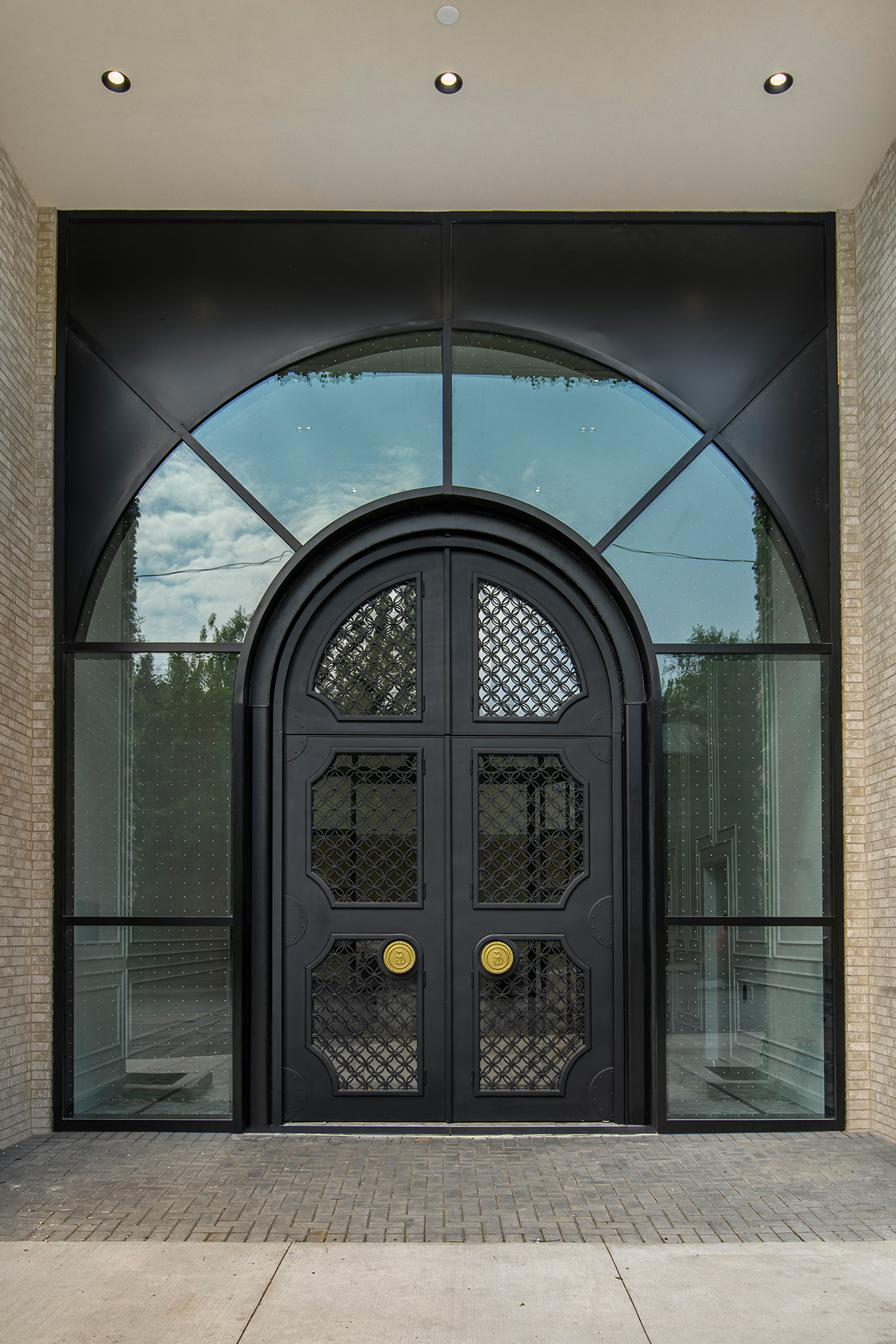

Straight lines are practical. Curves are romantic. An arched front door softens the whole face of a house. It draws the eye upward, lends a sense of history, and makes even a simple entrance feel a little more special. It’s no accident that so many of the world’s most memorable doors, from cathedrals to Parisian townhouses, sit beneath an arch.
We build a lot of arched front doors, and we’ll happily admit they’re among our favourites to make. Here’s a guide to the shapes, styles and details that go into a great one.
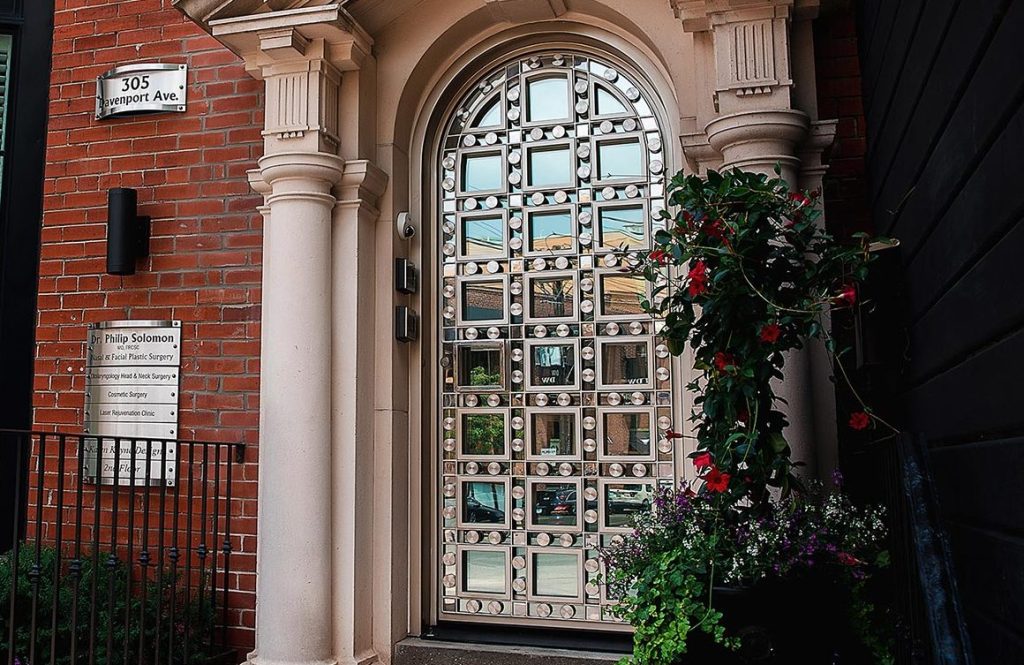
Why the arch has lasted
The arch has shaped architecture for thousands of years. Roman builders used the rounded arch to span openings in stone; medieval masons pointed it into the gothic arch that carries cathedral windows; later, Renaissance and Beaux-Arts architects made it the signature of a grand entrance. Some of its staying power is structural, but most of it is emotional. A curve feels welcoming, and a door beneath an arch reads as an invitation rather than a barrier. You’ll spot plenty of them in our look at the most iconic doors in history.
The main arch shapes
- Half-round (full radius) — a true semicircle. Classic, formal and the most dramatic, it needs a tall opening to really shine.
- Eyebrow or segmental — a gentle, shallow curve. Subtle and versatile, it works where there isn’t enough height for a full half-round.
- Elliptical — a flatter, wider curve that looks lovely over a pair of doors or a wide entrance.
- Gothic or pointed — two curves meeting at a point, for a Tudor, medieval or boldly modern look.
- Square door, arched transom — a rectangular door with curved glass above, giving the effect of an arch without shaping the door itself.
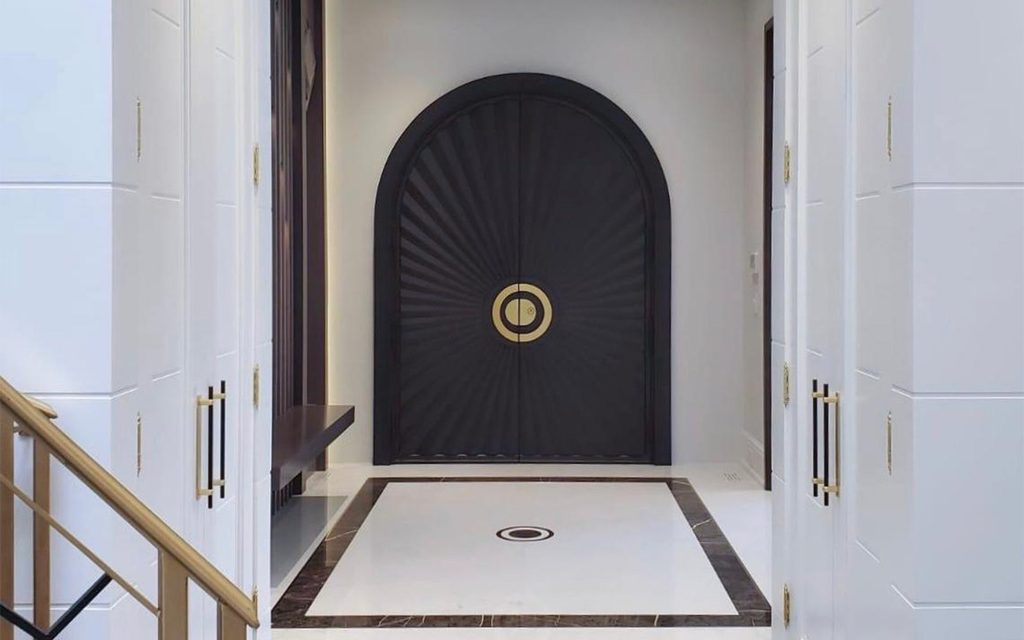
Matching the arch to your architecture
The right curve depends on the house. A half-round arch suits Mediterranean, Spanish and French château homes. Eyebrow arches sit comfortably on traditional, craftsman and European-inspired houses. Gothic points belong on Tudor and stone manors. And arches are having a real moment in contemporary design, too: a smooth, unornamented curve in a flush wood or metal door feels fresh and quietly modern.
Wood, iron or glass?
- Carved hardwood is warm and classic, and a curve shows off the grain beautifully. See our custom wood doors.
- Iron and glass lets the arch become a frame for decorative ironwork, with light pouring through. See our custom metal doors.
- A mix of both — a timber door beneath an arched iron grille, or a metal frame with wood panels — gives you warmth and detail in one piece.
Arched double doors
A pair of doors beneath a single arch is one of the most elegant entrances there is. The curve ties the two leaves together into one composition, so the entrance reads as a single, confident gesture. It takes careful work, since each leaf carries half of the curve and the two have to meet perfectly at the centre, but the result is timeless.
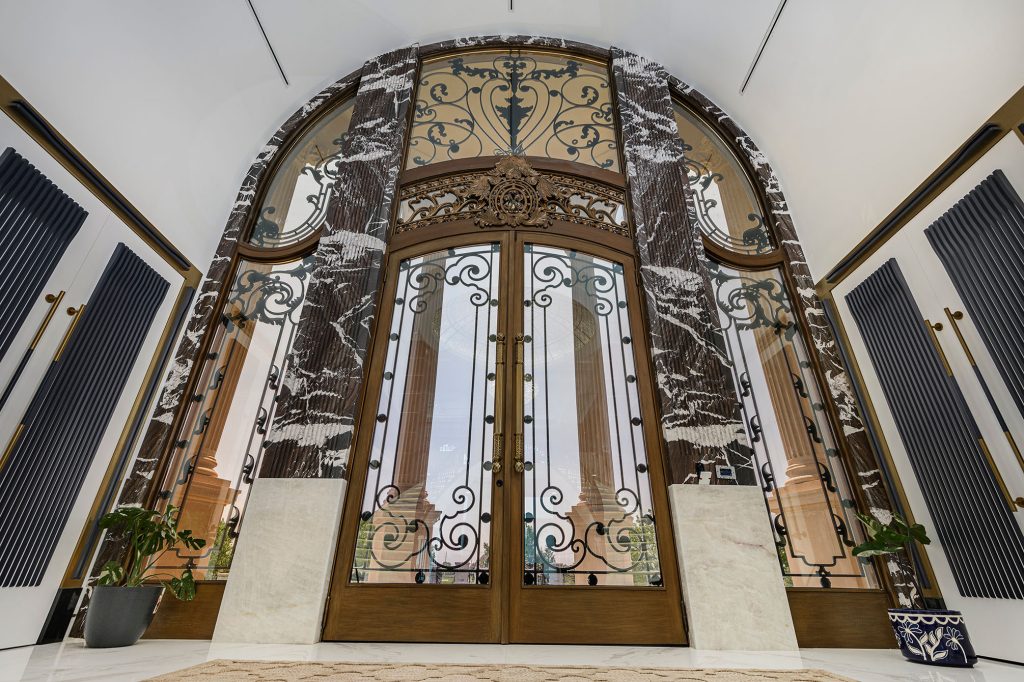
Letting in the light
Arched transoms and sidelights are a lovely way to bring light into an entrance hall while keeping the door itself solid. A fan of glass above the door, sometimes with radiating ironwork and sometimes simply clear, adds height and grace, and it glows beautifully from the street at night. We cover glass choices in our guide to sizes, finishes, hardware and glass inserts.
What goes into making an arched door
Curves ask more of the maker. The frame has to be shaped precisely so the door meets it evenly all the way round. The glass has to be cut to the exact radius. And the weather seals have to follow the curve without a single gap, which matters a great deal in a Canadian winter. It’s slow, careful work, and it’s the difference between an arch that simply looks nice and one that feels handmade in the best possible sense.
Designing your arched front door
Every arched door we build is drawn around its opening and the house it belongs to. Explore our luxury front doors for ideas, and get in touch whenever you’d like to talk through your entrance.

Frequently asked questions
What is an eyebrow arch door?
It’s a door with a gentle, shallow curve at the top rather than a full semicircle. It adds softness without needing a very tall opening.
Can I add an arch to an existing rectangular opening?
Often, yes. You can reshape the opening, or keep a rectangular door and add an arched transom or trim above it. It depends on the structure, so it’s worth having the opening assessed first.
Do arched front doors suit modern homes?
Yes. A clean, unornamented arch in a flush wood or metal door is very much part of contemporary design right now.
Are arched doors harder to seal against the weather?
They take more care, because the seal has to follow the curve, but a well-made arched door is just as weathertight as a rectangular one.