
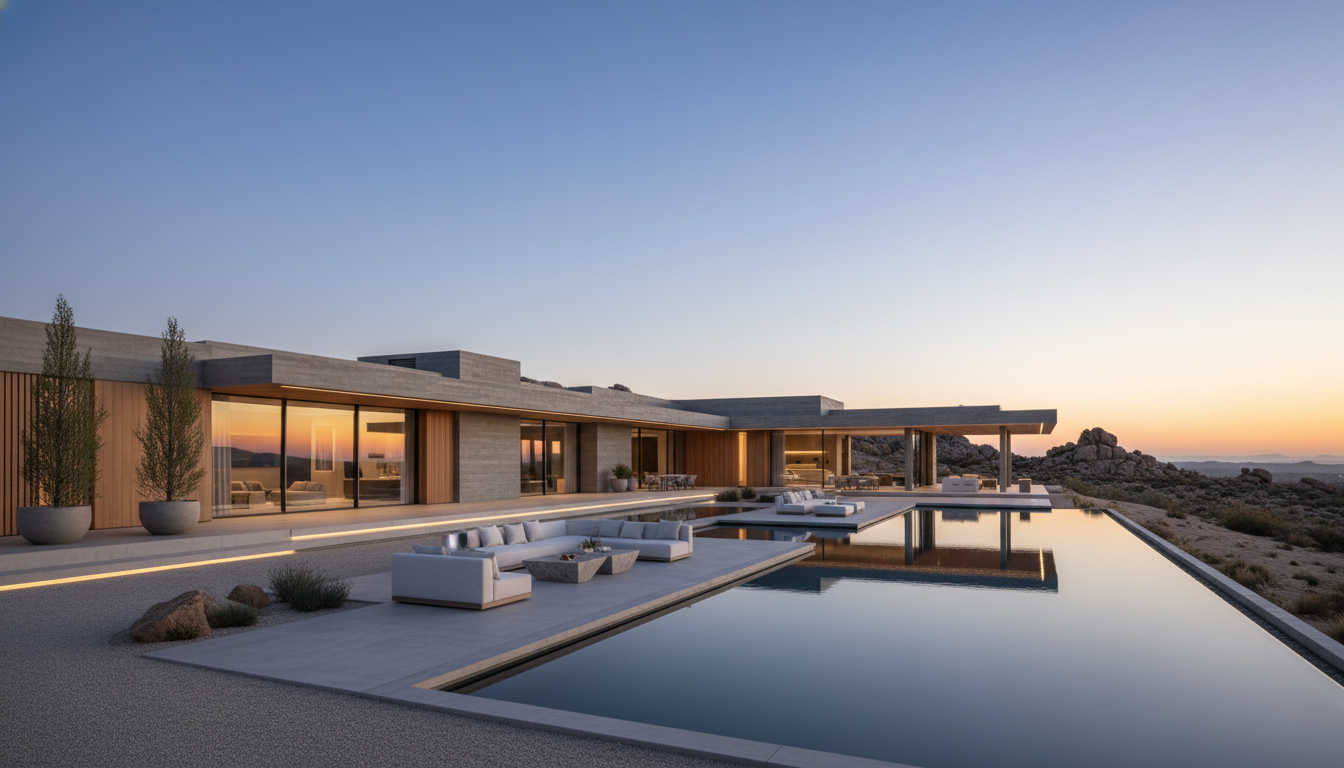

In the landscape of contemporary luxury design, few movements have proven as enduring and transformative as minimalism.
What began as a radical artistic philosophy in 1960s New York has evolved into a defining aesthetic of modern architecture and interior design, fundamentally reshaping how we approach even the most functional elements of our spaces—including doors.
Today, the principles that guided Donald Judd, Dan Flavin, and Frank Stella continue to inform the creation of architectural elements that balance restraint with opulence, proving that in luxury design, reduction can be the ultimate refinement.

The Origins of Minimalist Philosophy
Minimalism emerged in the early 1960s as a decisive rejection of Abstract Expressionism’s emotional intensity and gestural excess.
Artists like Donald Judd, Robert Morris, Carl Andre, and Dan Flavin sought to strip art down to its essential elements, eliminating metaphor, symbolism, and personal expression in favor of pure materiality and geometric form.
The movement’s philosophical foundation rested on the principle that a work of art should exist as an autonomous object, referring to nothing beyond its own physical presence.
As Frank Stella famously declared, “What you see is what you see.” This radical literalism emphasized the intrinsic qualities of materials, the precision of fabrication, and the relationship between object and space.

Minimalist artists drew inspiration from earlier European movements—the geometric abstractions of De Stijl, the industrial materials of Russian Constructivism, and the Bauhaus fusion of art and function.
Yet they pushed these concepts further, creating works characterized by simple geometric forms, industrial fabrication, serial repetition, and an emphasis on spatial presence rather than pictorial illusion.
The 1966 exhibition “Primary Structures” at New York’s Jewish Museum marked minimalism’s arrival as a major force in contemporary art. What followed was not merely an aesthetic shift but a fundamental reimagining of how objects occupy and define space.
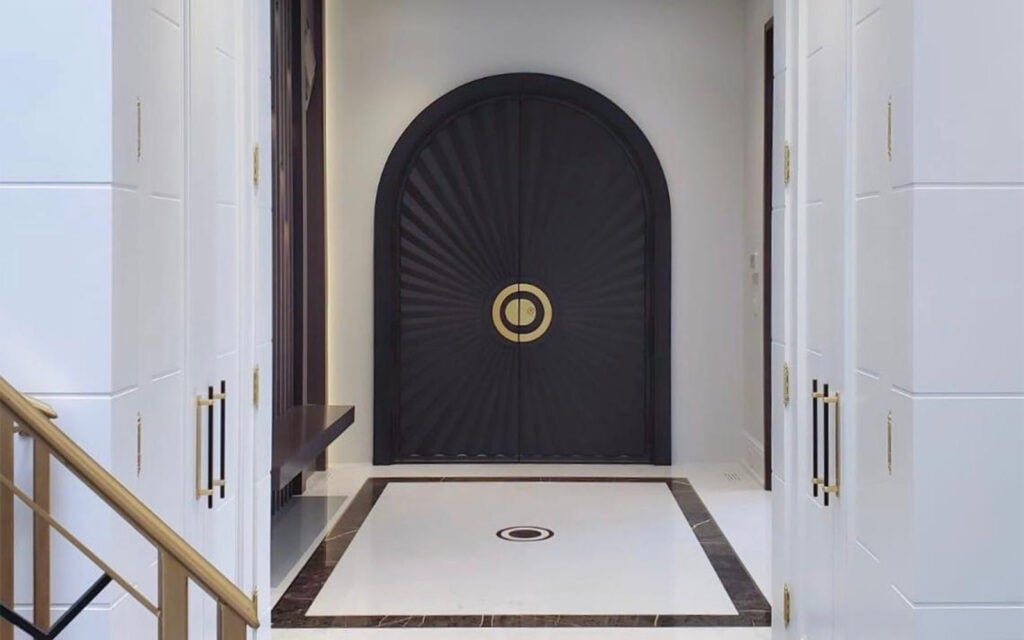
From Gallery to Architecture: Minimalism’s Spatial Legacy
While minimalism began in the realm of sculpture and painting, its principles proved remarkably transferable to architecture and design.
The movement’s emphasis on clean lines, honest materials, and the elimination of the superfluous aligned perfectly with modernist architectural ideals that were simultaneously gaining prominence.
Minimalist architecture adopted the movement’s core tenets: form stripped to essentials, materials celebrated for their inherent qualities, and spaces designed to create contemplative rather than dramatic experiences.
This approach rejected ornamentation not as a cost-saving measure but as a philosophical commitment to clarity and precision.
In luxury architecture, minimalism found an unexpected home. Rather than representing austerity, the minimalist approach became associated with refinement and sophistication.
The principle of “less is more”—originally articulated by Bauhaus architect Ludwig Mies van der Rohe—took on new meaning in high-end residential and commercial spaces, where every remaining element could be executed with exceptional quality and craftsmanship.
The Door as Sculptural Element
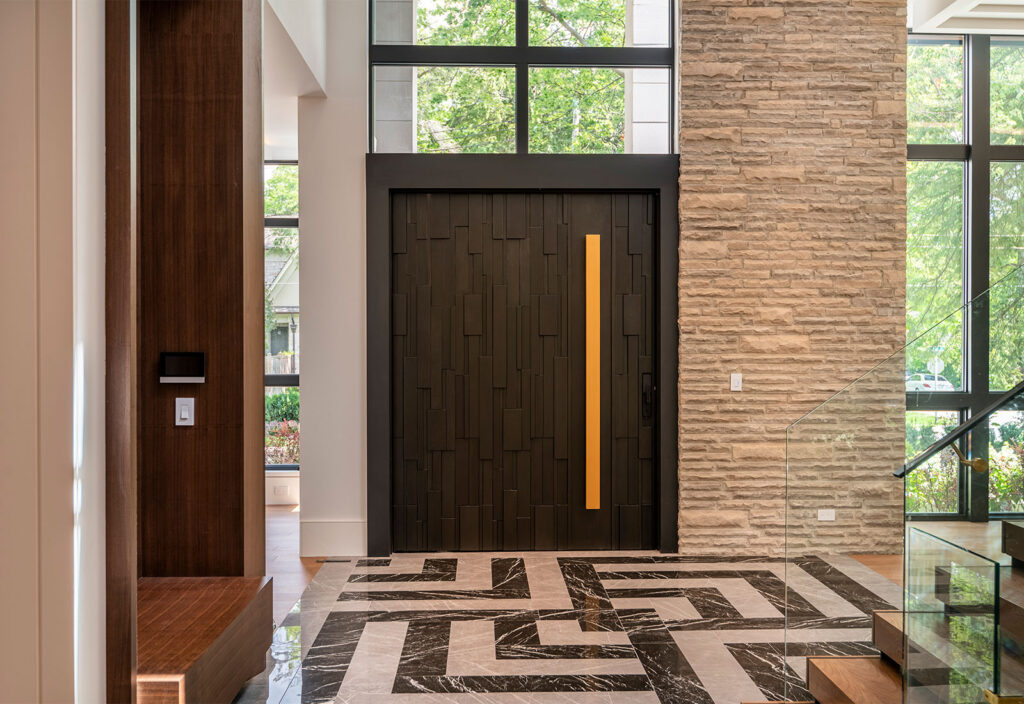
Nowhere is minimalism’s architectural influence more evident than in contemporary door design.
What was once primarily a functional necessity has been reimagined as a sculptural element that defines transitions between spaces while embodying the minimalist ethos.
In minimalist door design, every detail matters because there are so few. The elimination of decorative molding, raised panels, and ornamental hardware means that proportion, material, and finish become paramount.
A minimalist door must achieve presence through restraint, commanding attention through its clarity rather than its complexity.
Contemporary minimalist doors share several defining characteristics that trace directly to the art movement’s principles.

Flush surfaces create uninterrupted planes that emphasize the door’s geometric purity. Clean lines and sharp edges define form without embellishment. Precision fabrication ensures flawless execution, as any imperfection becomes immediately visible in such simplified designs.
The honest expression of materials allows wood grain, metal patina, or glass transparency to provide visual interest without applied decoration.
The pivot door, which has surged in popularity within luxury architecture, exemplifies minimalist principles perfectly.
Its hidden hardware and seamless rotation create the illusion of a floating plane, while its often-oversized proportions emphasize the relationship between object and space—a central concern of minimalist sculpture.
Materials as Expression
Just as minimalist artists like Carl Andre used raw steel plates or bricks as their medium, contemporary door designers rely on the inherent qualities of materials to create visual impact. This approach elevates material selection from a practical consideration to an artistic decision.
In luxury minimalist door design, materials are chosen for their authentic character and aging properties. European oak, walnut, and teak offer rich grain patterns and warm tones that deepen over time.
Brushed or blackened steel provides industrial strength with a refined finish. Bronze develops a living patina that evolves with the environment. Glass—whether clear, frosted, or tinted—plays with light and transparency to define space without solid barriers.
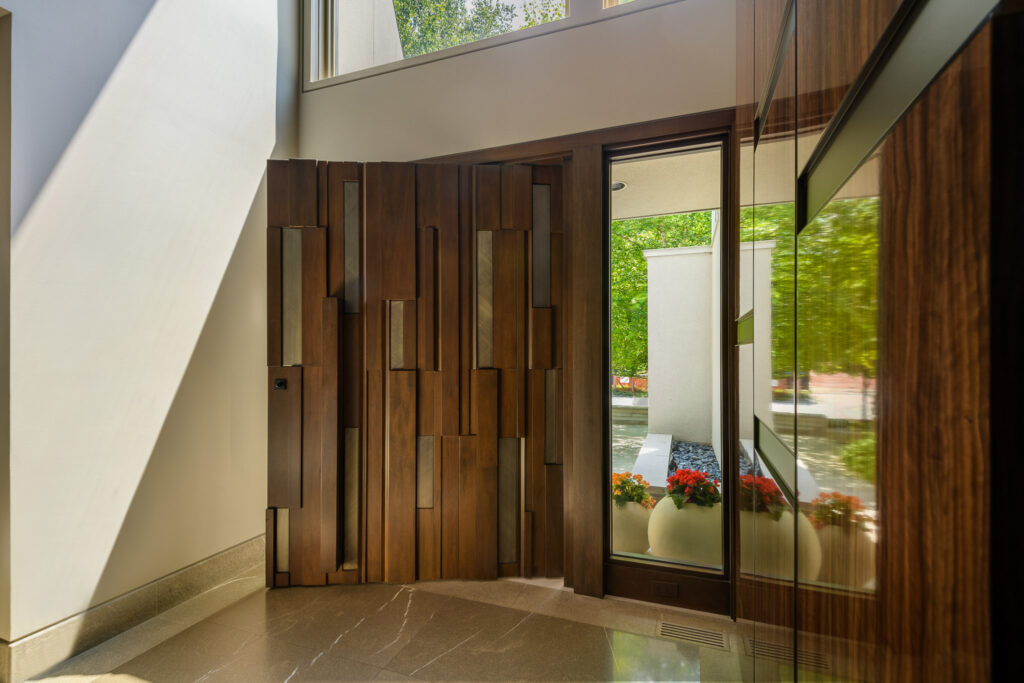
The minimalist commitment to honesty extends to fabrication as well. Rather than concealing construction methods, contemporary designs often celebrate joinery, reveal material thickness, and showcase the precision of manufacturing.
This transparency about process echoes minimalist art’s rejection of illusionism and embrace of literal presence.
Scale and Proportion in Minimalist Design
Minimalist sculpture often achieved monumental presence through sheer scale and precise proportions. Donald Judd’s wall-mounted boxes commanded gallery spaces through their carefully calculated dimensions and repetitive arrangements. This understanding of scale translates directly to architectural applications.
Contemporary minimalist doors frequently employ oversized dimensions to create dramatic impact through proportion rather than ornament. An entrance door measuring ten or twelve feet in height makes a powerful statement not through applied decoration but through its relationship to the human body and surrounding architecture.
The door becomes a geometric plane that anchors the façade, much as a minimalist sculpture anchors a gallery.
Equally important is the relationship between solid and void. Minimalist doors often incorporate strategic glazing—horizontal vision strips, vertical sidelights, or full glass panels—that create compositional balance while serving functional purposes.
These openings are positioned with the same mathematical precision that Sol LeWitt applied to his wall drawings, creating visual rhythms that enhance rather than complicate the overall form.

The Role of Negative Space
One of minimalism’s most significant contributions to design thinking is its elevation of negative space. Minimalist artists understood that empty space is not merely absence but an active compositional element.
This principle profoundly influences how contemporary doors interact with their architectural context.
In luxury interiors, minimalist doors are designed to recede when closed and reveal when open, allowing the architecture itself to remain the primary focus.
Frameless designs, flush-mounted hardware, and concealed hinges eliminate visual clutter, creating clean transitions between rooms. The door becomes a movable wall rather than a decorative object, serving its function with quiet efficiency.
This approach extends to the surrounding architecture as well. Minimalist door installations often eliminate traditional casing and trim, allowing the door to sit flush with the wall plane.
This detail, while subtle, reinforces the minimalist commitment to reducing elements to their essence—the door becomes a pure threshold, nothing more and nothing less.
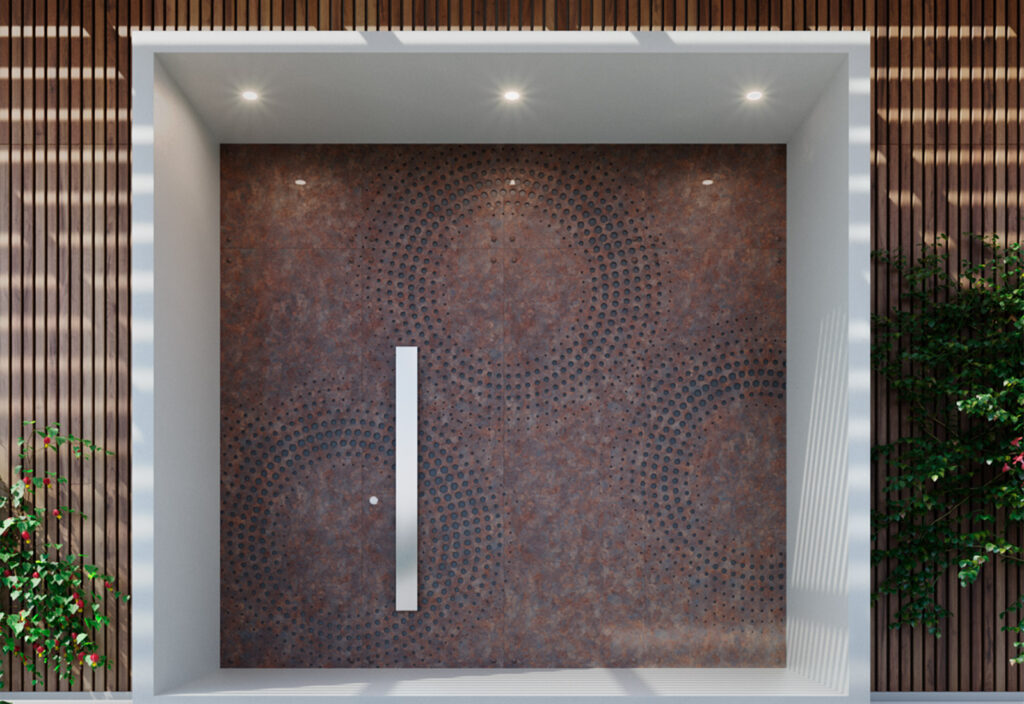
Texture and Finish in Restrained Palettes
While minimalist design limits decorative elements, it compensates through sophisticated use of texture and finish.
This principle derives from minimalist painting, where artists like Agnes Martin and Robert Ryman explored subtle variations within restricted palettes.
Contemporary luxury doors employ this strategy through carefully selected finishes that add depth without decoration. Wire-brushed wood reveals grain structure while providing tactile variation. Sandblasted glass creates translucency gradients. Acid-etched metal develops unique surface textures. Lacquered finishes create reflective planes that interact with changing light.
Color, when employed, typically adheres to minimalist restraint. Neutral tones—whites, grays, blacks, and natural wood tones—dominate, creating serene visual fields that allow material quality and architectural form to take precedence.
Occasional color accents, when used, are applied with the same deliberation that Ellsworth Kelly brought to his color-field paintings.

Technology and Minimalist Ideals
Modern technology has enabled minimalist door design to achieve new levels of refinement. Precision CNC machining allows for tolerances that would have been impossible during minimalism’s artistic heyday.
Concealed motorization enables seamless operation without visible mechanisms. Integrated access control eliminates traditional hardware entirely.
These technological advances align perfectly with minimalist philosophy. By hiding complex systems within simplified forms, designers can create doors that appear effortlessly simple while delivering sophisticated performance.
The result is what might be called “high-performance minimalism”—objects that honor minimalist aesthetics while incorporating cutting-edge functionality.
This fusion of art and technology echoes minimalist sculpture’s embrace of industrial fabrication.
Just as Dan Flavin used mass-produced fluorescent tubes to create art, contemporary door designers use advanced manufacturing to achieve minimalist purity at architectural scale.
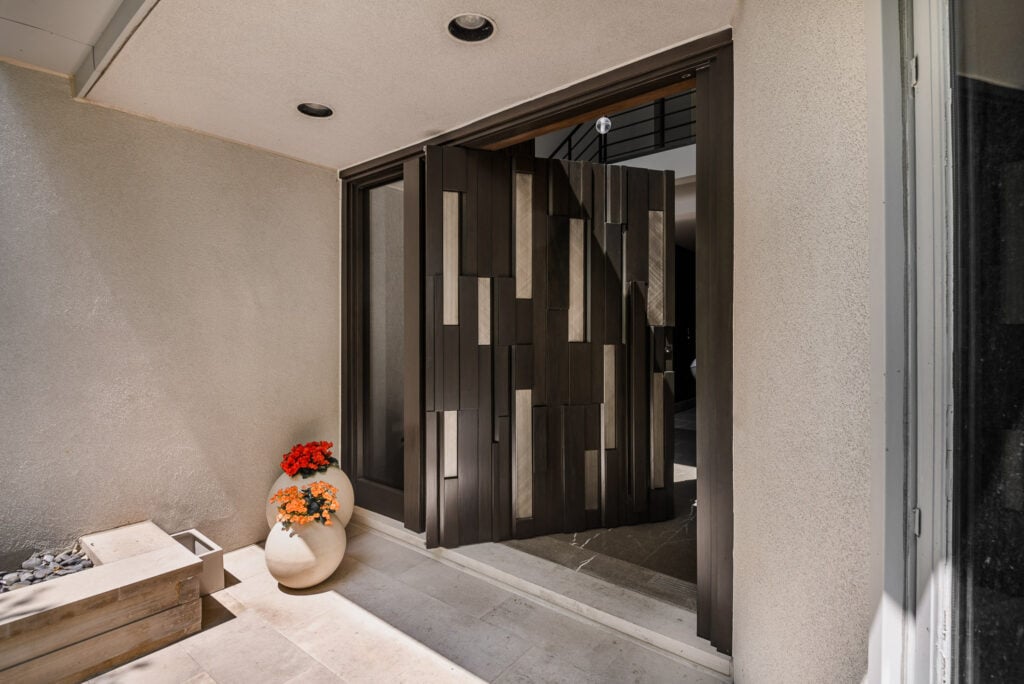
Minimalism in Commercial and Hospitality Design
The influence of minimalist door design extends well beyond residential applications. In luxury hospitality and high-end commercial spaces, minimalist doors serve to establish sophisticated, calming environments that allow other design elements and human activity to take center stage.
Hotels, spas, and upscale restaurants increasingly favor frameless glass partitions, flush wood doors, and pivot entries that provide necessary separation without visual weight. These elements create flow between spaces while maintaining the clean, uncluttered aesthetic that has become synonymous with contemporary luxury.
Corporate environments have similarly embraced minimalist door design as an expression of professionalism and forward-thinking values.
Glass-fronted meeting rooms with slim aluminum frames, seamless wood doors with integrated access control, and automated sliding panels all demonstrate how minimalist principles can enhance both aesthetics and functionality in commercial settings.

The Enduring Appeal of Minimalist Design
More than six decades after its emergence as an art movement, minimalism’s influence on design remains remarkably strong. This longevity stems from minimalism’s fundamental alignment with human needs for clarity, order, and calm—qualities that become increasingly valuable in an overstimulated world.
In luxury design specifically, minimalism offers a path to sophistication that transcends trends. By focusing on proportion, material quality, and craftsmanship rather than applied decoration, minimalist designs age gracefully.
A well-executed minimalist door remains timeless because it was never tied to a particular decorative fashion. This timelessness also reflects minimalism’s philosophical depth.
The movement was never merely about aesthetics but about fundamental questions of how objects exist in space, how materials express meaning, and how reduction can amplify rather than diminish presence. These are enduring concerns that continue to resonate with designers and clients seeking work of lasting significance.
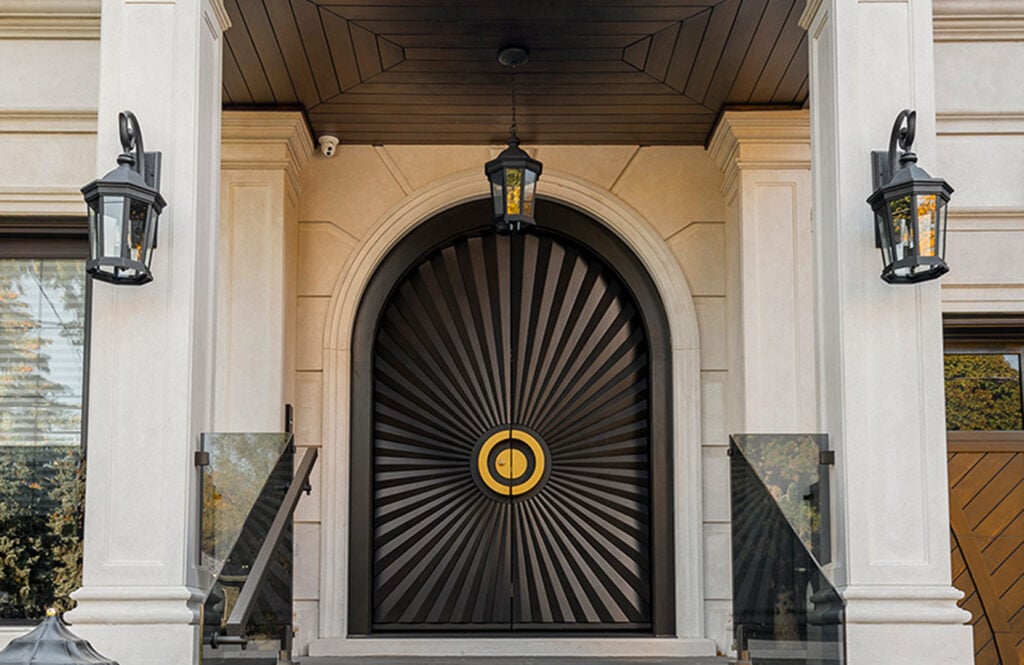
Craftsmanship and Minimalist Execution
Perhaps paradoxically, minimalist design demands exceptional craftsmanship. When ornament cannot hide imperfections, execution must be flawless. This requirement has elevated the role of skilled artisans in contemporary minimalist door production.
The fabrication of a luxury minimalist door requires mastery of traditional techniques combined with contemporary precision. Wood must be perfectly joined, with seams so tight they’re nearly invisible.
Metal must be finished to exacting standards, with no variation in surface quality. Glass must be installed with tolerances measured in millimeters.
This emphasis on craft quality creates a natural affinity between minimalist design and bespoke fabrication. While minimalist art often employed industrial production to eliminate the artist’s hand, minimalist architectural elements benefit from artisanal expertise that ensures every detail meets the highest standards.
The result is work that honors minimalism’s aesthetic principles while celebrating the human skill required to achieve them.

Looking Forward: Minimalism’s Evolving Influence
As we move further into the 21st century, minimalism continues to evolve while maintaining its core principles.
Contemporary designers are exploring how minimalist approaches can incorporate sustainability, integrate smart technology, and respond to changing cultural values—all while preserving the clarity and restraint that define the movement.
In door design, this evolution manifests in innovations like thermally broken frames that meet energy codes without compromising clean lines, biometric access systems that eliminate visible hardware entirely, and sustainably sourced materials that honor minimalism’s commitment to honest expression.
The dialogue between art and architecture that birthed architectural minimalism continues as well. Contemporary artists exploring minimalism’s legacy—from installation artists working with light and space to sculptors investigating material properties—continue to inspire designers working at architectural scale.
This cross-pollination ensures that minimalism remains a living philosophy rather than a historical style.

Conclusion
From its origins in New York galleries to its current expression in luxury architecture worldwide, minimalism has proven to be far more than an aesthetic preference. It represents a fundamental approach to space, material, and form that continues to yield insights for designers across disciplines.
In contemporary door design, minimalism’s influence is unmistakable. The commitment to essential forms, honest materials and spatial clarity that defined Donald Judd’s sculptures finds new expression in pivot doors, frameless glass panels and flush wood installations.
These elements do more than close openings—they define transitions, create moments of architectural clarity, and demonstrate that true luxury often lies in what is left out rather than what is added.
For those seeking to create spaces of enduring sophistication, minimalist principles offer a proven path.
By emphasizing proportion over ornament, material quality over applied decoration, and spatial presence over visual complexity, minimalist door design achieves what the original minimalist artists sought: objects of clarity and power that speak through their essential nature rather than supplementary embellishment.
In this sense, every exceptional minimalist door is both functional necessity and artistic statement—a threshold that honors the movement’s legacy while serving contemporary needs with quiet confidence.