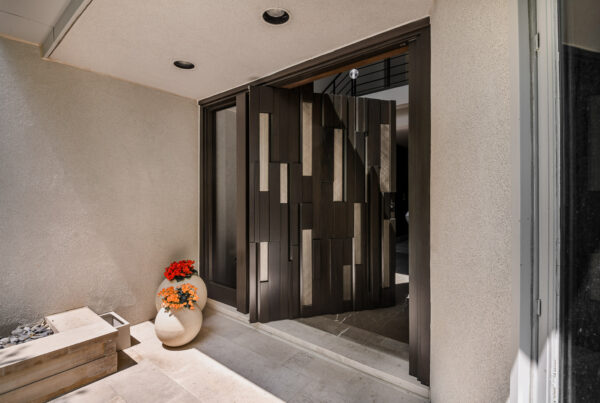


When it comes to home décor, adding a touch of luxury can elevate the entire ambiance of a space. And what better way than with a custom solid wood door?
A door is not just an entrance, it’s also an important element of a home’s architecture, adding a sense of character and sophistication. But with so many options available in the market, how do you know which door to choose?
For homeowners considering a balance of durability, insulation, and elegance, a solid core door is often an excellent choice before moving toward more premium solid wood options.
Wood doors at Art Boulle are made with the highest quality materials and craftsmanship, a product that is truly luxurious.
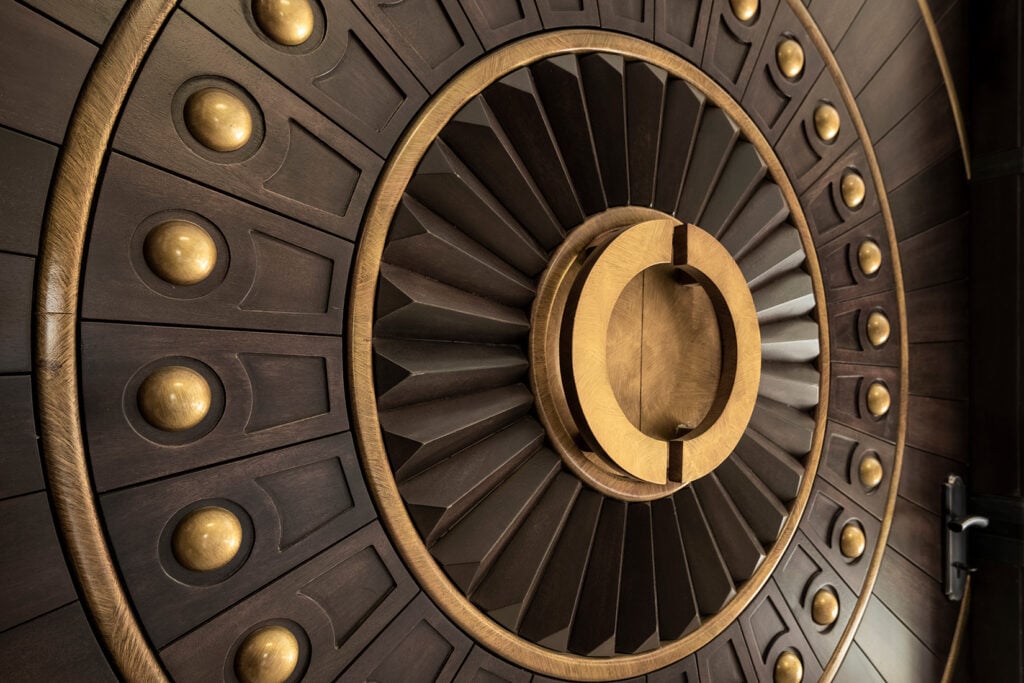
Art Boulle works with you to create a door that is perfect for your space and will really make an impact.
In this article, we will explore the differences between solid wood doors and solid core and hollow core doors, and how the right choice can help you achieve the result you desire.
Solid Wood Doors – The Epitome of Elegance
Solid wood doors have been a staple of luxury homes for centuries. They are made from 100% solid wood, offering a high-end look and feel that is unmatched by any other type of door.
This type of door adds warmth, beauty, and character to any space and is perfect for both interior and exterior applications. Exterior doors are engineered, having internal metal reinforcements to avoid warping, contraction, or expansion.
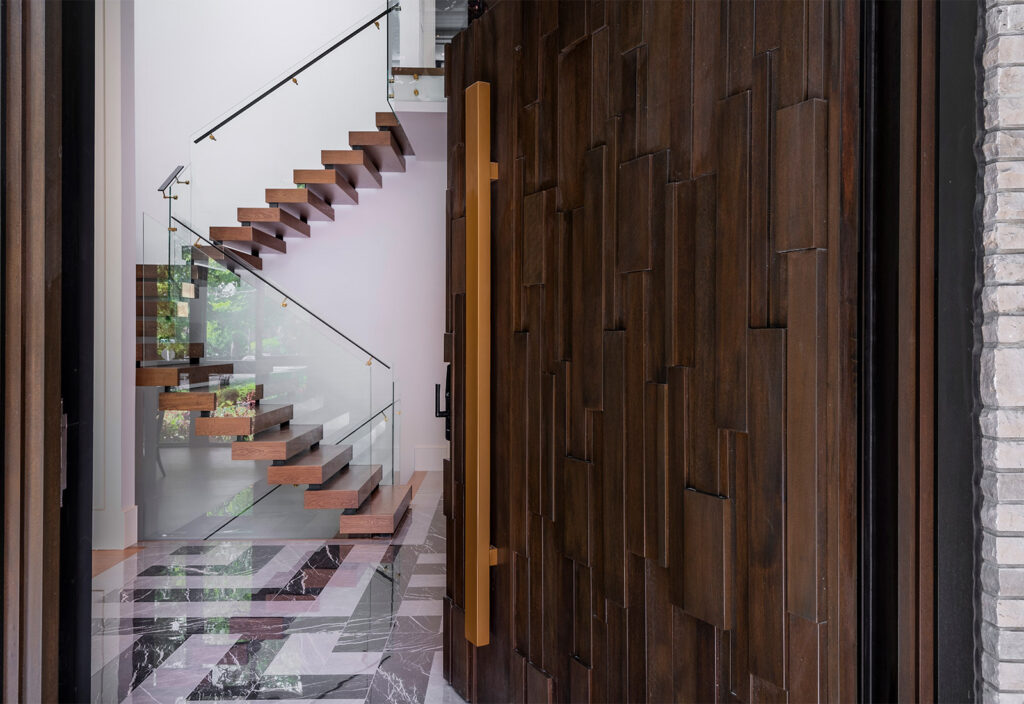
Solid wood doors are available in a variety of wood species, including cherry, mahogany, oak, walnut, and more, and can be customized to any size, shape, or style to match the aesthetic of your home.
Solid wood doors are created through a meticulous process that involves professionally drying the selected wood and carefully crafting it into a door that is designed to withstand the test of time.
In addition, Solid wood doors allow for the implementation of custom carvings and design alterations, leaving a result that is both unique and bespoke.
One of the main advantages of solid wood doors is their durability. Solid wood construction makes a door very strong and resistant to wear and tear, making them ideal for high-traffic areas.

Solid wood doors are also great insulators, providing a natural barrier against heat, cold, and noise.
One of the biggest advantages of a solid wood door is its ability to customize its thickness. This allows for a seamless integration of hardware, like pivot systems, automatic door closers, and concealed hinges.
Art Boulle is an expert in woodworking and specializes in creating custom solid wood doors that are both unique and of exceptional quality. When creating a solid wood front door, the artisans at Art Boulle start by custom designing each door.
Solid Core Doors
Solid core doors have a solid core made of a composite material, like particle core, that is sandwiched between two wood veneer panels, making them more affordable than a solid wood door.
Solid core doors are heavier and thicker than hollow core doors, but not as heavy as solid wood doors.
While solid core doors offer many of the same benefits as solid wood doors, they are not as durable or authentic looking. They also don’t block sound as well as a thick solid wood door, and often fall short of the feeling of a solid wood door.
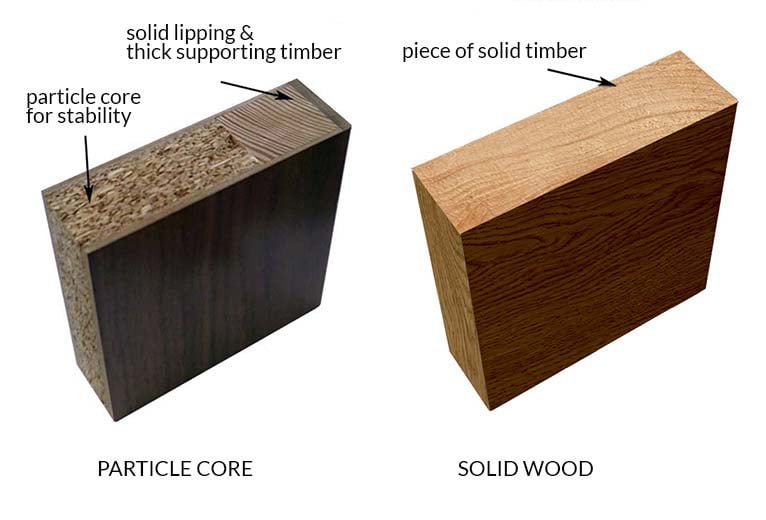
In addition, solid core doors cannot exceed a certain thickness and come in standard sizes. Therefore, this prevents the integration of certain hardware and lacks the ability to customize.
As a result, Art Boulle doesn’t work with solid core doors as both quality and design possibilities are limited.
However, they still provide a higher level of insulation and noise reduction than hollow core doors and can be a great option for interior applications.
Hollow Core Doors
Hollow core doors are the most affordable option, and can only be used as interior doors. These doors are made with a lightweight cardboard honeycomb core, covered in thin wood veneers.
The hollow core makes these doors lightweight and easy to install but also means they do not provide any insulation or soundproofing. Hollow core doors are not strong or durable and are easily damaged by impact.

Hollow core doors have a variety of limitations when it comes to hardware integration and often offer very little flexibility in terms of size and design.
What is inside a solid core door?
A solid core door looks like any other flush or panelled door from the outside. The difference is the material between the two faces. Instead of a cardboard honeycomb, the space is filled completely with an engineered wood core, then faced with wood veneer or hardboard skins and edged with solid wood stiles.
There are three common core materials:
- Particleboard core. Wood particles bonded with resin and pressed into a dense slab. This is the most common and most affordable solid core door material, and it is what most people mean by a particle core door.
- MDF core. Medium density fibreboard is finer and smoother than particleboard. It is very flat and stable, which makes it a good base for painted doors.
- Stave core. Strips of real wood glued together edge to edge, then covered with veneer. It is the premium option: it holds screws and hinges better, stays flatter on tall doors and feels closest to solid wood.
How solid core doors are made is fairly simple. The core is cut to size, framed with wood stiles and rails, faced on both sides with veneer under heat and pressure, then trimmed, sanded and machined for hinges and hardware. Because the core is engineered rather than natural timber, it moves very little with changes in humidity.
Solid core vs hollow core vs solid wood at a glance
| Hollow core | Solid core | Solid wood | |
|---|---|---|---|
| Core | Cardboard honeycomb | Particleboard, MDF or stave core | Natural timber throughout |
| Typical weight (32 x 80 in door) | About 15 to 25 lbs | About 45 to 70 lbs | About 55 to 90 lbs or more |
| Sound reduction (STC) | About 20 | About 25 to 30 | About 30 or more, depending on thickness |
| Stability in humidity | Good | Very good | Moderate, depends on build |
| Dent resistance | Poor | Good | Excellent |
| Can be refinished | No | Veneer only, limited | Yes, many times |
| Custom sizes and carving | Very limited | Limited | Fully custom |
| Relative cost | Lowest | Middle | Highest |
Figures are typical ranges for a standard interior door. Real results depend on thickness, species, seals and installation.
Sound is where most people notice the difference. Sound Transmission Class (STC) is a logarithmic scale, so a 10 point improvement is roughly the difference between hearing a conversation through a door and hearing only that someone is talking. The gaps around the door matter just as much as the core, so good seals and a proper threshold make a real difference.
Where a solid core door is worth it
- Bedrooms. The most valuable upgrade in most homes, because it blocks household noise where you sleep.
- Home offices. It keeps calls private and keeps the rest of the house out of your meetings.
- Bathrooms and ensuites. Better privacy and a more solid feel.
- Media rooms. A hollow core door does very little to contain low frequency sound.
- Rental and high traffic areas. Solid core doors resist dents and knocks far better than hollow core.
It matters less for closets, pantries and doors that usually stay open. For entrances, statement doors and anything oversized or carved, solid wood doors remain the stronger choice.
What to check before you buy a solid core door
- Ask what the core is made of. Particleboard is the entry level. Stave core is the better option for quality, screw holding and flatness.
- Check the veneer thickness. Thin veneers show every flaw and cannot be sanded if damaged.
- Match the hinges to the weight. Use three heavy duty hinges as a minimum, and four on tall or wide doors.
- Check the frame. Jambs installed for hollow core doors may need reinforcing before they carry a heavier door.
- Plan the seals. Perimeter seals and a door bottom do as much for sound as the core itself.
Can you use a solid core door as an exterior door?
Not an interior one. A standard interior solid core door is not built for rain, sun or freeze and thaw cycles, and the core and veneer can swell or delaminate quickly when used outside, especially through a Canadian winter. A solid core exterior door needs an exterior rated core, weatherproof adhesives, proper sealing and an exterior finish.
At Art Boulle, exterior doors are engineered with internal metal reinforcement to resist warping, contraction and expansion. Read more about how custom doors perform in Canadian winters or our guide to custom front entry doors.
How to choose the right type of door?
Solid wood doors are made from premium quality woods such as mahogany, teak, chanul, and exotic veneers. Solid wood doors are made entirely from natural wood, and their beauty is enhanced by the unique grain patterns and rich tones that are characteristic of a particular type of wood.
In contrast, solid core doors and hollow core doors are made of lower grade materials.
Frequently asked questions
What is a solid core door made of?
A solid core door has an engineered wood core, usually particleboard, MDF or stave core, sandwiched between two wood veneer or hardboard faces and edged with solid wood.
Are solid core doors worth it?
For bedrooms, home offices, bathrooms and media rooms, yes. They block noticeably more sound, resist dents and feel more substantial than hollow core doors. For closets and doors that usually stay open, a hollow core door is often enough.
How heavy is a solid core door?
A typical 32 by 80 inch solid core door weighs about 45 to 70 lbs, roughly three times the weight of a hollow core door of the same size.
Are solid core doors soundproof?
No door is fully soundproof, but a solid core door reduces sound much better than a hollow core door. Adding perimeter seals and an automatic door bottom improves the result further.
What is the difference between solid core and solid wood doors?
A solid core door has an engineered core under a wood veneer. A solid wood door is made from natural timber throughout, so it can be carved, made in custom thicknesses and refinished many times. Solid wood is the premium option, while solid core is the practical middle ground.
Can a solid core door be used outside?
Only if it is specifically rated for exterior use. Interior solid core doors are not designed for moisture and temperature swings and can fail quickly outdoors.
Conclusion
In conclusion, the type of door you choose for your home can make a big difference in the overall look, feel, functionality, and longevity of your space.
Solid Wood doors offer the most benefits, from sound insulation to durability, and the biggest benefit being customization.
If you want to add a touch of luxury and sophistication to your home, a solid wood door is the way to go.
At Art Boulle, we specialize in creating custom solid wood doors that are tailored to your unique style and preferences. Book a design consultation to learn more about our products and services.